Nano Banana 2 Lite : quand le modèle économique suffit
Guide pratique Nano Banana 2 Lite : prix réels, générations en 4 secondes, la limite du 1K et quand Nano Banana 2 reste indispensable.

Nano Banana 2 Lite est le modèle d'entrée de gamme de Google pour la génération d'images : un membre plus léger de la famille Nano Banana 2 qui produit des images 1K en environ 4 secondes pour $0.034 chacune via l'API Gemini. Google l'a lancé le 30 juin 2026, aux côtés de Gemini Omni Flash, et le positionne comme le remplaçant recommandé de la Nano Banana d'origine. L'ID du modèle API est gemini-3.1-flash-lite-image.
Si vous voulez juste notre avis rapide : utilisez Lite pour les brouillons, les illustrations de blog, les miniatures, les visuels pour réseaux sociaux et tout ce que vous générez en grand volume. Passez à Nano Banana 2 lorsque vous avez besoin d'une résolution 2K ou 4K. Et lorsque l'image contient du texte dense ou qu'il s'agit du visuel principal que tout le monde verra (couverture, image héro, publicité), montez en gamme avec Nano Banana Pro. Sur BananaBanana, Lite coûte $0.03 par image tandis que Nano Banana 2 à la même résolution 1K coûte $0.06, donc pour la plupart des travaux quotidiens, le modèle économique est littéralement à moitié prix pour le même nombre de pixels.
Nous ne testons pas ce modèle de loin. Lite est intégré à notre chaîne de production depuis le jour de son lancement, et toutes les illustrations de cet article ont été générées avec. Cela nous donne un échantillon suffisant pour voir où il tient la route et où il montre ses limites.
Qu'est-ce que Nano Banana 2 Lite ?
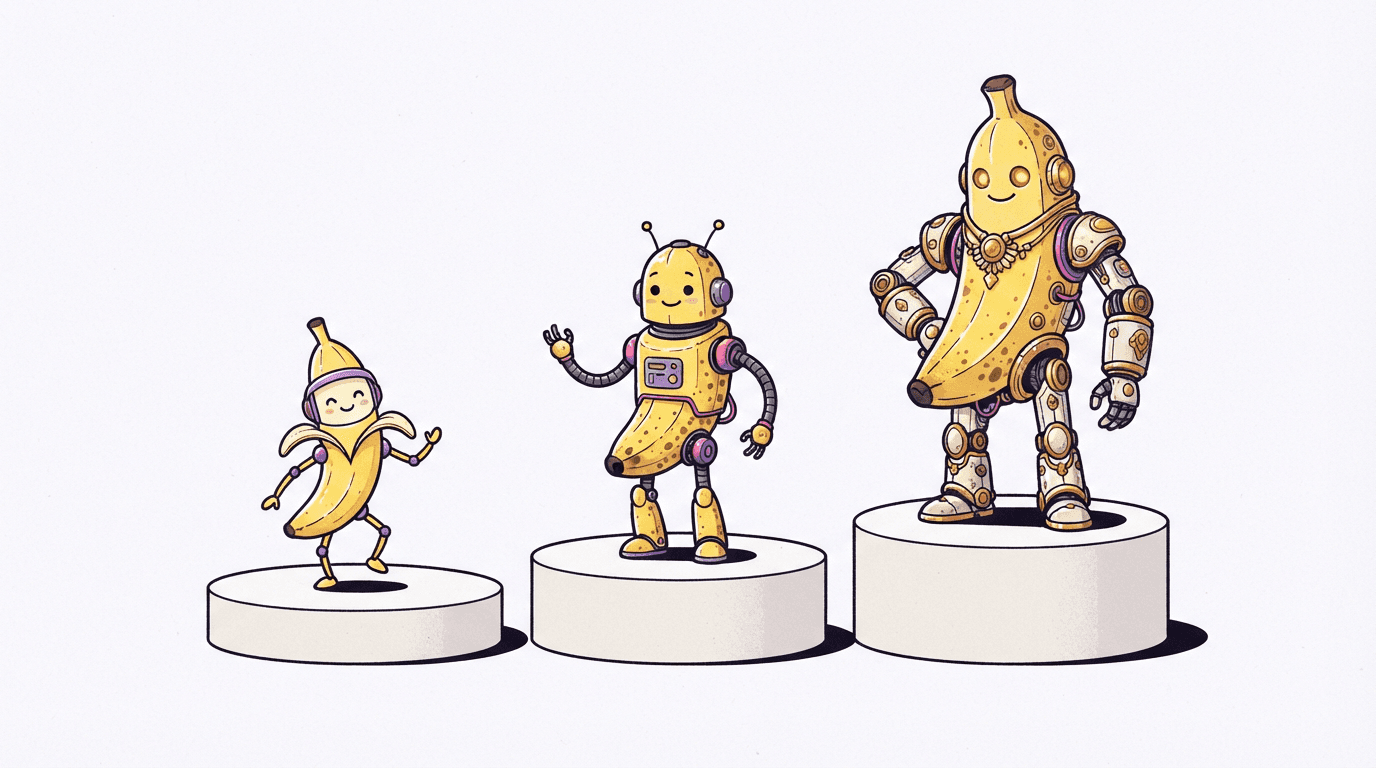
La gamme d'images de Google comprend désormais trois niveaux actifs. Nano Banana 2 Lite se situe tout en bas, conçu pour la vitesse et le volume. Nano Banana 2 (gemini-3.1-flash-image) est le modèle généraliste intermédiaire. Nano Banana Pro (gemini-3-pro-image) gère les tâches complexes au sommet. Le Nano Banana d'origine (gemini-2.5-flash-image) est désormais obsolète, et la documentation de génération d'images de Google indique explicitement de migrer vers Lite.
L'annonce de lancement présente Lite comme un modèle pour "l'idéation rapide et les pipelines de développement à haute vitesse où la rapidité et le coût sont les principales contraintes". Au-delà du marketing, la promesse est tenue. Le respect des consignes est solide. Les instructions de composition sont bien comprises. Le texte court s'affiche de manière lisible plus souvent que ce à quoi je m'attendais pour un modèle à bas coût.
Quelques spécifications nous ont surpris. Selon la documentation de l'API Gemini, Lite accepte jusqu'à 14 images de référence d'objets par requête, ce qui est supérieur aux 10 de Nano Banana 2. Il prend également en charge dix formats d'image, du carré 1:1 au cinématographique 21:9. Ce qu'il ne propose pas au niveau de l'API : les références de personnages, les références de style et la recherche Google Search. Pour être honnête, nous n'avons jamais exposé ces fonctionnalités sur BananaBanana pour aucun modèle ; de simples images de référence suffisent pour la plupart des besoins, vous ne verrez donc pas de différence sur notre plateforme. Cependant, si vous appelez directement l'API Gemini et devez garder un personnage cohérent sur toute une série d'images, Lite n'est pas le bon outil.
Combien coûte Nano Banana 2 Lite ?
L'annonce de Google fixe le prix à $0.034 par image 1K sur l'API Gemini. Dans la grille tarifaire de Google, c'est une baisse significative : l'ancien Nano Banana coûtait environ $0.039, Nano Banana 2 est à $0.067 en 1K, et Pro commence à $0.134. Lite est donc environ deux fois moins cher que le modèle standard, avant même de comparer avec d'autres plateformes.
Sur BananaBanana, nous facturons $0.03 par image Lite, ce qui est inférieur au tarif officiel de l'API de Google. Nous proposons ce modèle à un tarif promotionnel pour son lancement ; je ne peux pas promettre que cela durera indéfiniment. La liste complète des prix se trouve sur la page des tarifs, et le modèle haut de gamme a sa propre page : Nano Banana Pro.
C'est l'argument économique qui l'emporte. Un dollar permet d'obtenir 33 images. Illustrer un blog de 30 articles avec cinq images par article coûte environ $4.50. Mille miniatures de produits reviennent à $30, alors que le même lot sur Nano Banana 2 en 1K coûterait $60, et $130 en 4K. Pour de gros volumes de génération d'images, la différence s'accumule très vite.
S'agit-il de l'API de génération d'images par IA la moins chère ? Parmi les modèles de Google, oui, et de loin. À l'échelle du secteur, nous n'avons pas comparé tous les fournisseurs et ne prétendrons pas le contraire, mais $0.034 par image est presque le tarif le plus bas actuellement pour de la génération de cette qualité ; la plupart des API d'images bien connues se situent entre $0.04 et $0.19 par image selon le niveau de qualité.
Quelle est la vitesse de Nano Banana 2 Lite ?
Google annonce des générations en 4 secondes, et c'est ce que nous constatons. De bout en bout sur notre plateforme, file d'attente et traitement des miniatures inclus, une image Lite s'affiche généralement en moins de dix secondes. Nano Banana 2 prend environ deux à quatre fois plus de temps lors de nos essais.
La vitesse change l'usage bien plus que le prix. Quand une tentative prend quatre secondes, on arrête de peaufiner le prompt parfait et on lance juste cinq variantes. On choisit la meilleure et on avance. C'est cette boucle rapide qui fait la force du produit.
Nano Banana 2 Lite vs Nano Banana 2 : lequel choisir ?
Les deux modèles partagent la même base de génération 3.1, l'esthétique générale est donc très proche. Les différences résident principalement dans les limites de chacun.
| Nano Banana 2 Lite | Nano Banana 2 | |
|---|---|---|
| Prix API Google (1K) | $0.034 | $0.067 |
| Prix BananaBanana | $0.03 | $0.06 (1K), $0.09 (2K), $0.13 (4K) |
| Résolutions | 1K uniquement | 512px, 1K, 2K, 4K |
| Vitesse | ~4 s par image | plus lent, environ 2 à 4 fois plus d'après nos tests |
| Texte dans l'image | les textes courts passent bien | nettement plus fiable pour du texte dense |
| Images de référence (API) | jusqu'à 14 images d'objets | 10 objets + 4 personnages + 3 styles |
| Recherche Google Search (API) | non | oui |
| Idéal pour | brouillons, blogs, réseaux sociaux, volumes de visuels | visuels finaux, upscales, séries de personnages |
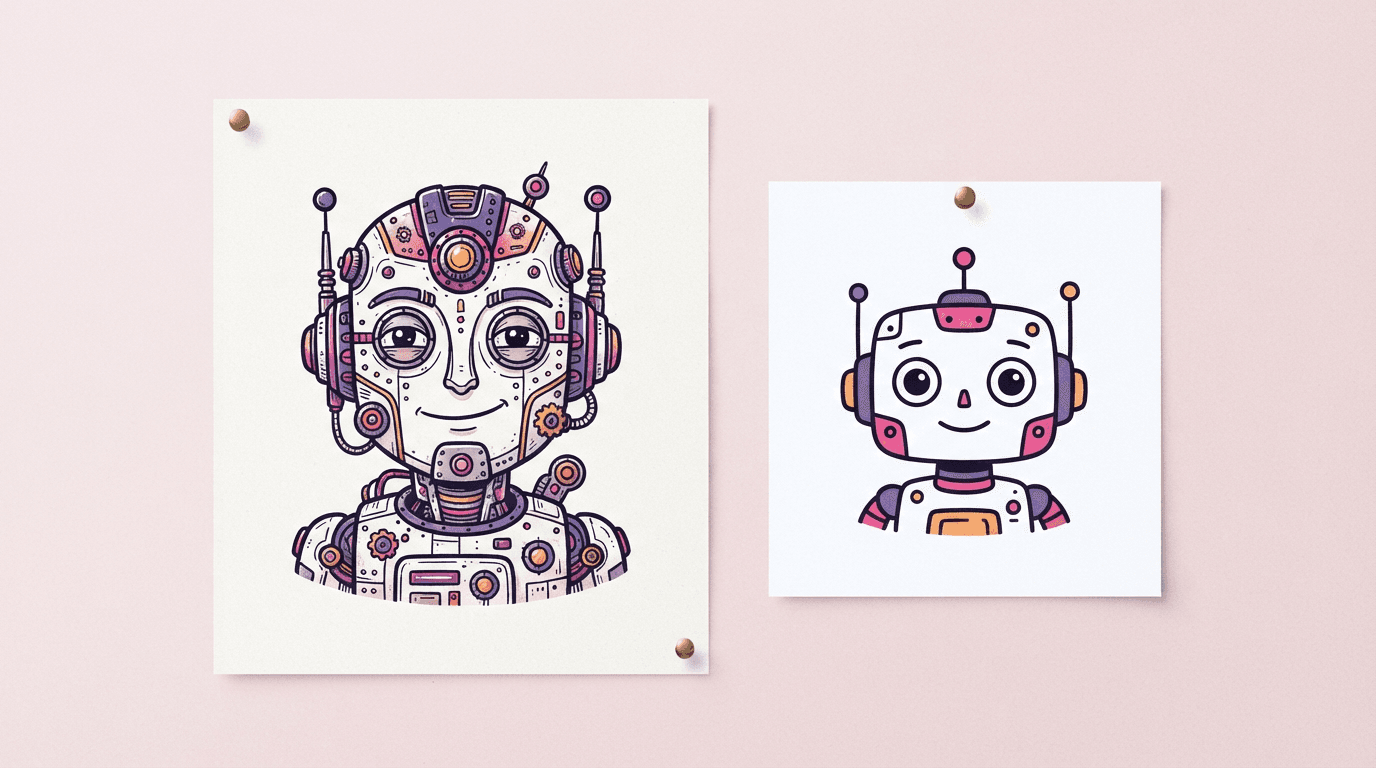
La véritable différence est la résolution. 1K correspond à 1024 pixels sur le côté le plus long (au format 1:1), ce qui est largement suffisant pour des images d'illustration, des avatars de chat ou tout visuel affiché à des tailles standards sur le web. Cela devient insuffisant dès que vous devez recadrer, imprimer ou afficher l'image en plein écran sur un grand moniteur. La résolution 4K de Nano Banana 2 gère parfaitement ces trois cas.
La qualité du texte est la deuxième différence. Les deux modèles prennent officiellement en charge l'affichage de texte dans l'image, et pour un mot ou deux, Lite s'en sort bien. Demandez une infographie avec six légendes et l'écart se creuse : lors de nos tests, Lite commence à omettre ou déformer les mots plus rapidement que Nano Banana 2. Ce n'est pas systématique, mais assez fréquent pour que nous évitions d'envoyer un visuel textuel généré par Lite sans vérification.
Pour le reste, avec des prompts classiques, c'est pile ou face. Pour être honnête, lors d'un test à l'aveugle sur des illustrations simples à un seul sujet en 1K, il serait difficile de les différencier.
Où Lite suffit amplement : retours d'expérience en production
Notre propre blog sert de terrain d'essai. Les images de couverture passent par Nano Banana Pro, le haut de gamme, car les couvertures sont affichées en grand et réutilisées comme aperçus sur les réseaux sociaux. C'est précisément là que l'exigence de qualité justifie son prix. En revanche, chaque illustration d'article, y compris les quatre de ce post, est générée avec Lite en 1K. À largeur de lecture, personne ne voit de différence, et le budget d'illustration par article a été réduit de moitié.
Là où le modèle a montré ses limites : les scènes complexes. Demandez un atelier avec une douzaine de petits objets sur des étagères et la version de Lite sera plus floue, avec des détails fins moins cohérents que ce que Nano Banana 2 produit avec le même prompt. Même constat pour le texte long, comme mentionné plus haut. Et la limite de 1K nous a déjà obligés à relancer une génération complète sur le modèle supérieur lorsqu'un visuel marketing nécessitait un recadrage serré.
Le flux de travail que nous avons adopté est simple : esquisser à bas coût, finaliser au meilleur niveau. Concevez l'idée sur Lite pour trois centimes l'essai, puis relancez le visuel retenu sur Nano Banana 2 en 2K ou 4K, voire sur Pro s'il s'agit d'un visuel clé. La plupart des brouillons n'ont jamais besoin de cette seconde étape, et c'est tout l'intérêt. D'ailleurs, c'est différent pour la vidéo : comme indiqué dans notre revue de l'API Gemini Omni Flash, un clip Omni Flash économique est souvent parfait pour les réseaux sociaux dès le premier jet.
Vous pouvez comparer ces deux modèles vous-même sur le générateur BananaBanana avec le même prompt. Pas besoin de clés API ni de configuration, et tout nouveau compte dispose d'un petit solde d'essai. Lite est aussi accessible aux agents IA : notre guide pour générer des images dans Claude Code explique comment l'appeler via MCP directement depuis votre éditeur de code.
FAQ
Quelle est l'API d'images IA la moins chère ?
Parmi les modèles d'images Gemini de Google, c'est Nano Banana 2 Lite à $0.034 par image 1K, soit environ la moitié du coût de Nano Banana 2. Sur BananaBanana, ce même modèle coûte $0.03 par image, sans configuration requise. Certains fournisseurs spécialisés ou modèles open-weight peuvent être moins chers, mais parmi les API de niveau professionnel, c'est actuellement le prix plancher.
Est-ce que Nano Banana 2 Lite prend en charge les formats 2K ou 4K ?
Non. Lite génère uniquement des images au format 1K. Si vous avez besoin de 2K ou 4K, utilisez Nano Banana 2 ($0.09 et $0.13 par image sur BananaBanana) ou Nano Banana Pro. Un schéma courant consiste à faire des esquisses en 1K sur Lite et à régénérer l'image finale sur le modèle supérieur.
Est-ce que Nano Banana 2 Lite est identique au Nano Banana d'origine ?
Non. Lite est un modèle plus récent (gemini-3.1-flash-lite-image) recommandé par Google pour remplacer le Nano Banana d'origine (gemini-2.5-flash-image). Il est moins cher ($0.034 contre environ $0.039), plus rapide et basé sur la génération plus récente 3.1.
Quelle est la vitesse de Nano Banana 2 Lite ?
Environ 4 secondes par image, selon l'annonce de lancement de Google. Dans notre pipeline de production, en incluant la file d'attente et le traitement des miniatures, les résultats arrivent généralement en moins de dix secondes.
Est-ce que Nano Banana 2 Lite gère les images de référence ?
Oui, jusqu'à 14 images de référence d'objets par requête, ce qui est supérieur à ce qu'accepte Nano Banana 2. Au niveau de l'API, il ne prend pas en charge les références de personnages, de styles ou la recherche Google Search ; ces options nécessitent Nano Banana 2 ou Pro via l'API Gemini.