AI Image Generator Crypto Payment: USDT, BTC, ETH Guide
Pay for AI image generation with crypto: 14 coins across 23 network options, deposits from $1, a reusable personal wallet, and what stays private.

An AI image generator with crypto payment lets you fund generations directly from a wallet, with no card and no bank in the loop. BananaBanana works exactly that way: you send any of 14 supported cryptocurrencies to a personal deposit address, the amount lands as a USD balance, and images then cost $0.03–$0.20 each, video clips $0.10–$6.00. Crypto is one of two ways to pay here — the other is card, PayPal or SEPA from $20 — and this guide is about the crypto one.
The quick version:
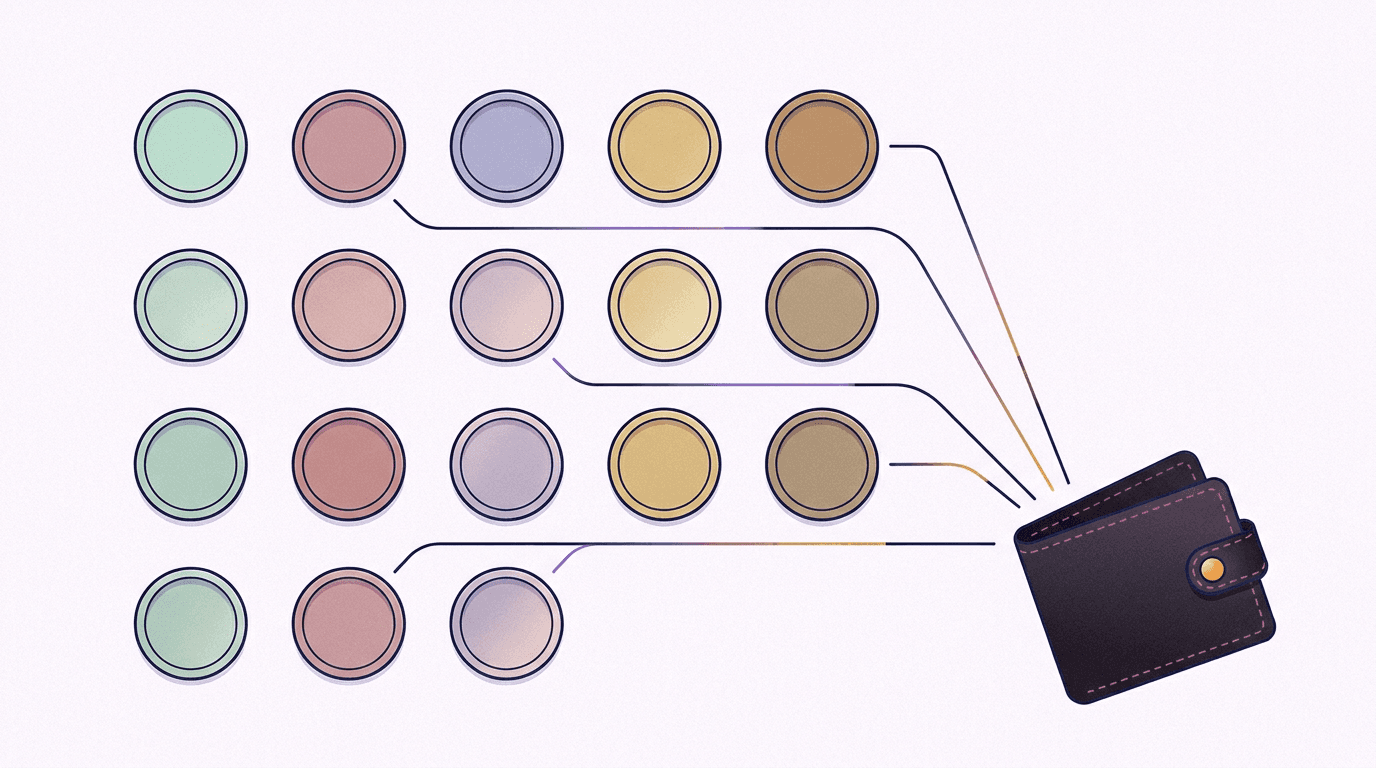
- Supported: BTC, ETH, SOL, TON, BNB, LTC, TRX, XRP, DOGE, BCH, plus USDT, USDC, DAI and TUSD stablecoins, 23 coin/network combinations in total.
- Minimum deposit: from $1 (USDT on TON, USDC on Solana, Base or BEP-20, DAI), $1–3 for the other coins; the exact minimum shows before you send.
- Your deposit address is permanent. No invoices, no 20-minute payment windows.
- Signup needs an email only. No KYC, no card, no identity documents.
- Processing runs through 0xProcessing, a crypto payment provider; we never see your wallet's private side.
Below is the full walkthrough I'd give a friend sending their first $5, plus an honest section on how anonymous this actually is (short answer: pseudonymous, not invisible).
Which cryptocurrencies can you pay with?
The full list, straight from our payment configuration as of July 2026:
| Coin | Networks | Good to know |
|---|---|---|
| USDT | ERC-20, BEP-20, Solana, TON | The most popular choice on the platform |
| USDC | ERC-20, Solana, Base, BEP-20 | Same idea, Circle-issued |
| DAI | ERC-20, BEP-20 | Decentralized stablecoin |
| TUSD | Avalanche C-Chain | Niche but supported |
| BTC | Bitcoin | Slowest confirmations of the list |
| ETH | Ethereum, Base, BEP-20 | Base version has far lower fees |
| SOL | Solana | Fast and cheap |
| TON | TON | Fast and cheap |
| BNB | BNB Chain | |
| LTC | Litecoin | Old reliable, low fees |
| TRX | Tron | |
| XRP | Ripple | |
| DOGE | Dogecoin | Yes, really |
| BCH | Bitcoin Cash |
Stablecoins on TON or Solana are what most of our users actually send, and for a practical reason: a $10 USDT transfer on TON costs a few cents in network fees and confirms in seconds. The same transfer on Ethereum mainnet can cost more than the deposit is worth during a gas spike. Nothing stops you from paying AI with Bitcoin or Ethereum here, but the fee math usually argues for a cheaper network doing the same job.
How do you buy AI credits with crypto, step by step?
First deposit, assuming you already own some crypto on an exchange or in a wallet:
- Register on BananaBanana with an email. Takes a minute; you get $0.20 free credit immediately.
- In your profile, open the deposit panel and pick a currency, say USDT on TON.
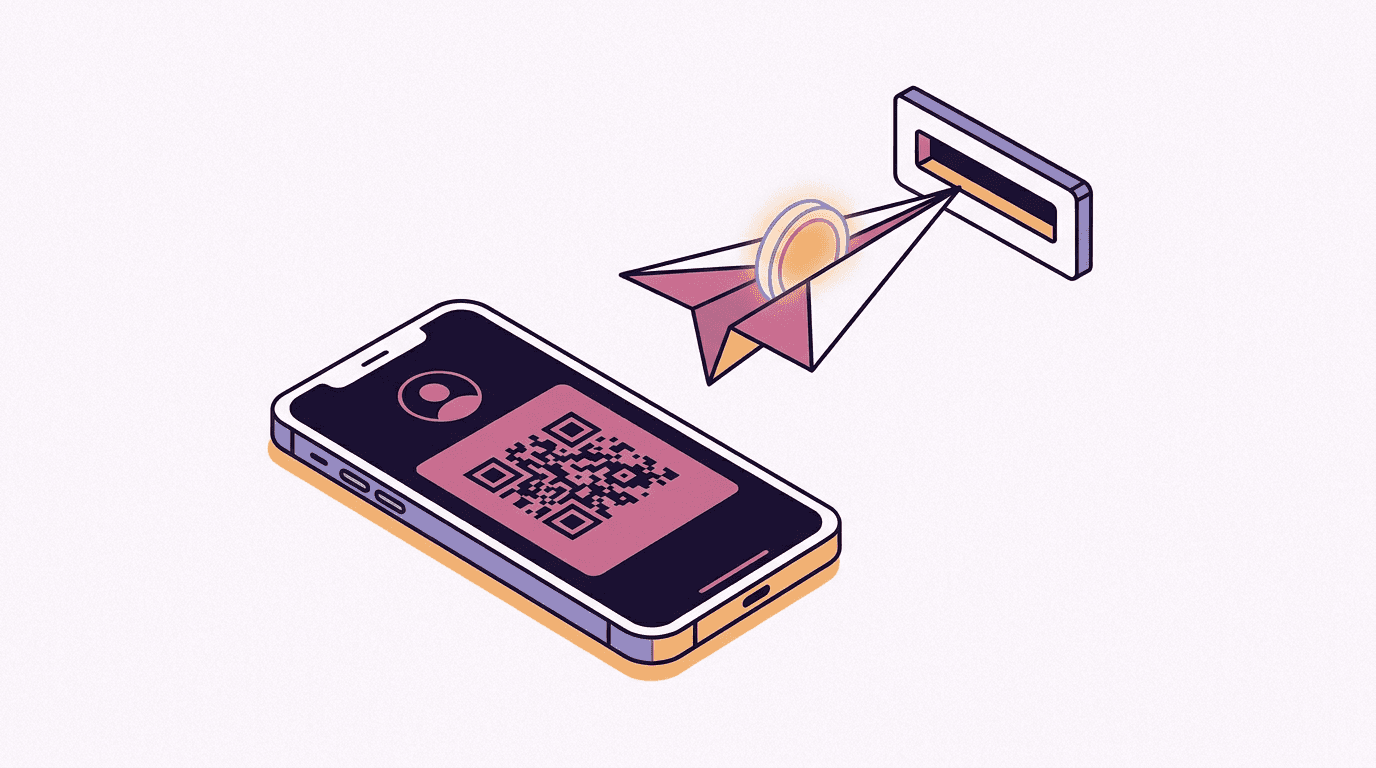
- The platform issues you a personal static wallet address for that currency. Copy it.
- Send any amount above the shown minimum ($1 for USDT on TON, $1–3 for the other coins). From an exchange, that's the standard withdrawal form: paste address, pick the matching network, confirm.
- After network confirmation the USD equivalent lands on your balance. TON and Solana take seconds to a couple of minutes; Bitcoin can take 10–30 minutes depending on congestion.
The amount you send matters a little beyond the minimum. Deposits of $50 or more earn a 5% balance bonus and $100 or more earns 10%, and an active promo code adds another 10% of the deposit on top of either, calculated separately and added together. Send $100 in USDT with a code active and $120 lands on the balance.
The static address is the detail worth pausing on. Most crypto checkouts generate a one-off invoice that expires in 15–30 minutes, and if the transfer arrives late (Bitcoin does this constantly) the payment strands in support-ticket limbo. Here the address is yours permanently, per currency. Send to it next month without touching the site first and the balance still updates. I consider this the single biggest quality-of-life difference from invoice-based crypto checkouts.
One real caveat: pick the network carefully. USDT sent on BEP-20 to an ERC-20 address of another platform is a classic way to lose funds anywhere in crypto. The deposit panel labels the network for every address it gives you, so match it in your exchange's withdrawal form and you're fine.
Stablecoins or Bitcoin: what should you actually send?
For a platform balance, I'd send stablecoins almost every time, and it's worth spelling out why.
Your BananaBanana balance is denominated in USD. The moment a deposit confirms, it converts at the current rate and stops moving. Send $20 of BTC and the balance is $20 whether Bitcoin doubles or halves next week. So volatile coins give you exchange-rate roulette in the minutes between sending and confirmation, and stablecoins give you none. A USDT AI generator deposit is boring in exactly the way payments should be.
Fees compound the argument. Rough July 2026 reality: a USDT transfer costs cents on TON, Solana or Tron, a dollar or two on BEP-20, and anywhere from a few dollars to painful on Ethereum mainnet. For a minimum-sized deposit, mainnet gas can exceed the deposit itself. If your funds already sit in ETH on an exchange, withdrawing on Base instead of mainnet keeps the asset but cuts the fee to cents; we accept ETH on Base natively.
When does BTC or ETH make sense? Mostly when it's what you already hold and you'd rather not do a conversion step first. That's legitimate. The transfer still works, it just costs more in fees and takes longer to confirm than a TON stablecoin doing the same job.

How anonymous is a crypto-paid AI image generator?
More private than a card checkout, and less anonymous than crypto marketing implies. Both halves are true, so let me be precise about what the platform does and doesn't know.
What we require: an email address that can receive a verification code. That's the entire identity layer. No name, no phone number, no billing address, no card, no KYC documents. Any working inbox does. What we log for fraud protection: standard things like IP-based signals, because promo-code abuse is real (the details are in the platform guide).
What stays visible anyway: the blockchain itself. Every deposit is a public on-chain transaction from your wallet to your deposit address. Anyone who knows your wallet address can see it sent funds somewhere; chain-analysis firms are reasonably good at labeling merchant processors. If your source wallet sits on a KYC exchange, that exchange knows you withdrew to a payment processor.
So the honest framing is pseudonymous: your generations tie to an email and a balance, not to a legal identity or a bank record. Nobody's card statement says what you generated. For most people wanting an "anonymous AI image generator", that's the actual requirement, and it's met. If your threat model is stronger than that, crypto alone doesn't provide it, and I'd rather say so than sell you privacy theater. And if you top up by card through PayPal instead, this whole section shrinks: PayPal knows who you are, and the payment shows up on a statement. Crypto is the more private of the two routes, which is most of the reason people pick it.
Content rules apply regardless: anonymity of payment doesn't switch off moderation, and Google's safety filters run on every generation.

FAQ
Can I pay for AI image generation with USDT?
Yes, on four networks: ERC-20, BEP-20, Solana and TON. USDT on TON is the cheapest and fastest combination we see in practice, with network fees of a few cents.
Is there an AI API with crypto payment?
The balance you top up with crypto pays for everything on the platform — see the full price list — and generation runs through thirteen models from Google, OpenAI, Alibaba and xAI under the hood. You get the models' API capabilities (seed, negative prompt, reference images) through the web UI without a Google Cloud billing account.
What's the minimum crypto deposit?
It depends on the coin and network: from $1 for USDT on TON, USDC on Solana, Base and BEP-20, and DAI, and $1–3 for the other currencies. The deposit panel shows the exact minimum for your chosen currency before you send anything. The card, PayPal and SEPA route has a different floor — $20 per payment.
Do I need KYC or identity verification?
No. Registration is an email and a password (or a Google account). There are no document checks and no card requirement, and deposits work from any wallet, custodial or not.
What happens if I send less than the minimum, or on the wrong network?
Below-minimum transfers may not credit, and wrong-network transfers to an address that doesn't support that network can be unrecoverable, as anywhere in crypto. Match the network label shown in the deposit panel exactly. When in doubt, send a small test amount first; the address is permanent, so a second transfer costs nothing extra.