How to Pay an AI Image Generator with USDT: 5-Minute Guide
Pay an AI image and video generator with USDT on TON, Solana, BEP-20 or ERC-20: the cheapest network, the TON memo rule, bonuses and what $10 buys.

Paying an AI generator with USDT means sending Tether's dollar stablecoin to a deposit address on the platform, which turns it into a USD balance you then spend on images and videos. On BananaBanana that balance covers every model on the site, from $0.03 Nano Banana images to Veo and Omni clips, and the whole route from an exchange to your first render takes about five minutes once you know which network to pick.
The short answer, if you only read this far:
- Networks accepted for USDT: TON, Solana, BEP-20 (BNB Smart Chain) and ERC-20 (Ethereum). Not Tron (TRC-20).
- Minimum: from $1 on most USDT networks as I write this; the deposit panel shows the live minimum for your network before you send.
- Cheapest in practice: Solana or BEP-20, because your exchange's withdrawal fee usually matters more than the chain's own fee.
- TON needs a memo. Forget it and the payment can't be matched to your account automatically.
- Bonuses: +5% from $50, +10% from $100, plus 10% more with a promo code. $100 with a code lands as $120.
This is the narrow USDT version. For every coin we accept and how private crypto payment really is, the general crypto payment guide covers the wider picture.
Which USDT network is cheapest for topping up?
USDT exists as separate tokens on separate blockchains, and the network you withdraw on decides both the fee and how the deposit is matched to you. Here's how the four we accept compare.
| Network | Typical on-chain fee | Deposit format | My take |
|---|---|---|---|
| Solana | under $0.001 | Personal address | Best default: cheap, fast, nothing extra to type |
| TON | about $0.005 | Shared address + personal memo | Very cheap, but the memo is easy to miss |
| BEP-20 (BNB Smart Chain) | about $0.10 | Personal address | What most of our USDT users actually send |
| ERC-20 (Ethereum) | $2–10, more under load | Personal address | Fine if gas is calm, wasteful for small amounts |
The fee column comes from Eco's 2026 USDT network fee comparison, measured from block explorers in early 2026. Treat it as a range, not a quote. On a typical day in October 2026 the picture can be calmer still: the Etherscan gas tracker showed Ethereum at about 0.18 gwei on 29 October, which puts a raw USDT transfer at a few cents.
So why not always use Ethereum? Because the chain fee isn't what you pay. Exchanges charge their own flat withdrawal fee, and Eco's same survey found Binance asking $5.00 for a USDT withdrawal on Ethereum against $1.00 on Tron. That flat fee eats a $10 deposit alive. On Solana and BNB Smart Chain the exchange fee is usually well under a dollar.
From our own payment records: roughly seven in ten USDT deposits that have reached a balance here came over BEP-20. People pick it because their exchange lists it first. That's a fine reason.

From exchange to first image: the 5-minute path
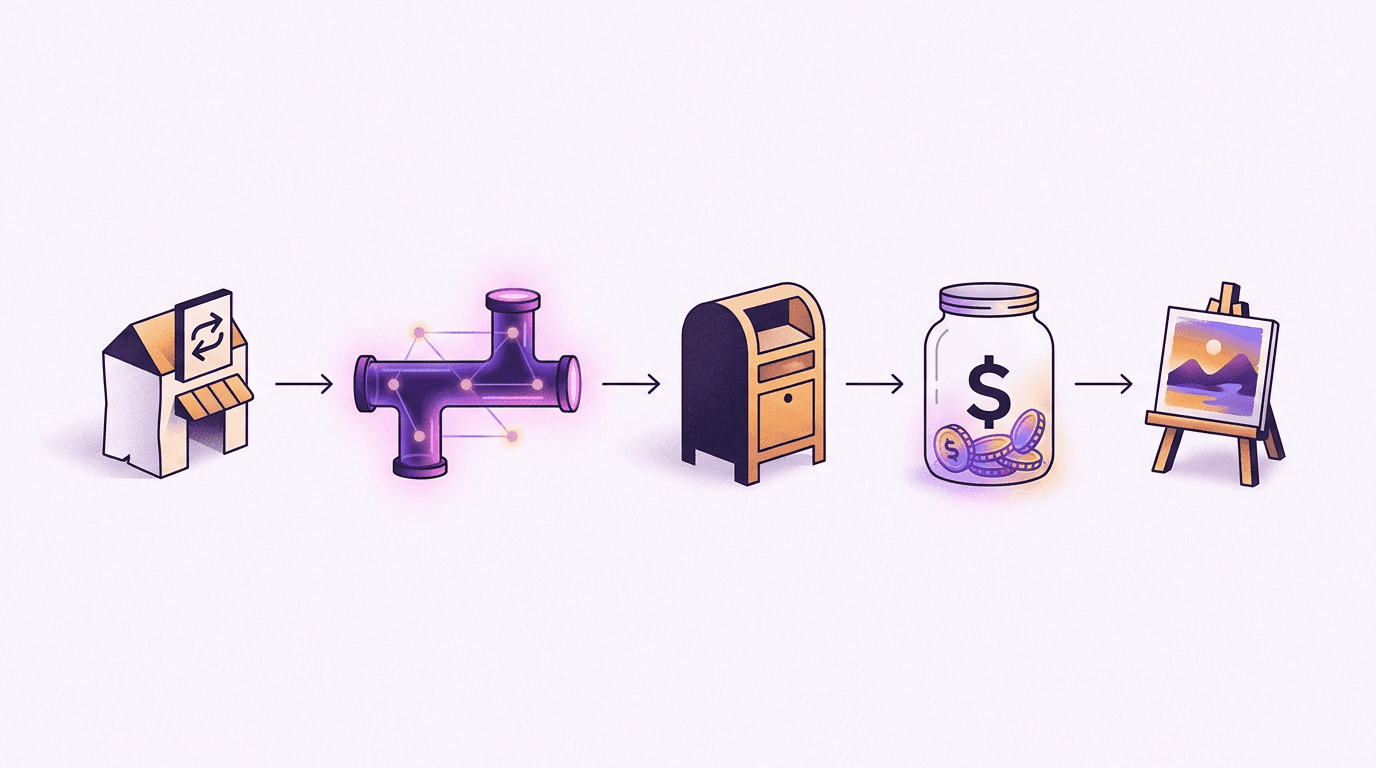
Assuming you already hold USDT on an exchange or in a self-custody wallet, the full sequence looks like this.
- Create an account on BananaBanana with an email or Google. No card is needed (here's what that protects you from), and new accounts start with $0.20, enough to test a few images before you send anything.
- Open your profile and find the top-up panel. Pick USDT, then the network you chose above.
- Copy the deposit details. For Solana, BEP-20 and ERC-20 you get a personal address that stays yours. For TON you get the platform's TON address plus an 8-character memo that belongs to your account only.
- Withdraw from your exchange. Paste the address, select the same network, enter the memo if you're on TON, check the amount after fees, confirm.
- Wait for the network. Solana, TON and BNB Smart Chain usually credit within a minute or two in my experience; Ethereum can take a few minutes longer. The balance appears in USD at the rate at the moment of confirmation.
- Generate. Open the generator, pick a model, write a prompt. Prices show before you click.
Two details make repeat top-ups painless. The address (or address + memo on TON) is static, so you can save it in your exchange's address book and skip step 3 next time. And there's no invoice window: a transfer that arrives late still credits, because nothing expired.
Prefer not to use crypto? Card, PayPal and SEPA work too, from $20 per payment, without the volume bonus described below.
What does $10 in USDT actually buy?
Ten dollars is the amount I'd suggest for a first real deposit: big enough that network fees round to nothing, small enough not to matter if you're still deciding. Here's how it spreads across models, using sticker prices from our pricing page and the effective price once bonuses apply.
| Model and setting | Price | With $10 | With $10 + promo code ($11) | Effective price at $100 + code ($120) |
|---|---|---|---|---|
| Nano Banana 2 Lite, 1K | $0.03 | 333 images | 366 images | $0.025 |
| Nano Banana 2.1, 1K | $0.03 | 333 images | 366 images | $0.025 |
| Nano Banana 2, 1K | $0.06 | 166 images | 183 images | $0.05 |
| Nano Banana Pro, 1K/2K | $0.11 | 90 images | 100 images | $0.092 |
| Nano Banana Pro, 4K | $0.20 | 50 images | 55 images | $0.167 |
| Veo 3.1 Lite, 4 s, 720p, silent | $0.10 | 100 clips | 110 clips | $0.083 |
| Veo 3.1 Fast, 8 s, 720p, silent | $0.70 | 14 clips | 15 clips | $0.58 |
| Gemini Omni 1.1 Flash, 10 s, 720p, with sound | $1.00 | 10 clips | 11 clips | $0.83 |
A realistic mix is more useful than any single row. Say 100 drafts on Nano Banana 2.1 ($3), 30 keepers redone on Nano Banana Pro ($3.30), and three short Veo Fast clips ($2.10). That's $8.40, with change left for retries.
Failed generations are refunded to the balance automatically, so a filtered prompt doesn't cost you a render. The balance never expires either. I'd still not park hundreds of dollars on any platform you've used for a week; top up as you go.

How do top-up bonuses change the math?
Two separate bonuses can apply to a USDT deposit, and they're calculated from the same base, then added together.
Volume bonus (crypto only):
| You send | Bonus | Lands on balance |
|---|---|---|
| under $50 | none | same as sent |
| $50–99 | +5% | $52.50 from $50 |
| $100+ | +10% | $110 from $100 |
Promo code: an active code adds 10% of every deposit, at any size. A $10 deposit with a code becomes $11; $50 becomes $57.50; $100 becomes $120. Codes come from partners and other users, and you can't use your own.
There's a small 1% tolerance below each threshold, so $49.50 still earns the 5% tier and $99 still earns 10%. That tolerance exists for a very specific annoyance.
Many exchanges subtract their withdrawal fee from the amount you type. You enter 50 USDT, pay a 1 USDT fee, and 49 USDT arrives. That misses the tier by fifty cents. My habit: type the threshold plus the fee (51 or 101 USDT) and check the "receive amount" line before confirming. On Solana or BEP-20 the extra is pocket change; on ERC-20 it's the main reason I'd avoid the network for bonus-sized deposits.
Five mistakes that strand a USDT deposit
Most failed USDT top-ups I've seen come down to one of these. None is exotic.
1. Sending on Tron. TRC-20 is the default USDT network on a lot of exchanges, and we don't accept USDT on it. (We do accept TRX, Tron's own coin, which confuses people further.) If your exchange preselects TRC-20, change it.
2. Mixing up BEP-20 and ERC-20. Both use addresses that start with 0x and look identical, so an exchange won't stop you sending on the wrong one. The deposit panel labels the network for every address; match it exactly.
3. Skipping the TON memo. On TON the address is shared and the memo is what identifies you. The panel marks it "Memo/Tag is required" and keeps it in a separate copy field, because the QR code carries the address only. Scan the QR, forget the memo, and the transfer arrives without a name on it. If that happens, contact support with the transaction hash; it's a manual case, not an automatic credit.
4. Sending dust. Below the minimum shown in the panel (about $1 on most USDT networks) a transfer may not credit at all. Also watch out for exchanges that withdraw "max balance" after fees and leave you sending 0.83 USDT.
5. Sending from a platform that batches withdrawals. Some services queue withdrawals and release them hours later. The money isn't lost, your deposit is simply late, and since the address never expires it'll still credit when it lands. Worth knowing before you open a support ticket after ten minutes.
When I'm unsure about a new exchange or wallet, I send $2 first. The address is permanent, so the real deposit afterwards costs only one more network fee.
FAQ
Can I pay with USDT on Tron (TRC-20)?
No. USDT is accepted on TON, Solana, BEP-20 and ERC-20 only. If your USDT sits on Tron, most exchanges let you withdraw the same balance on Solana or BNB Smart Chain instead, usually for a lower fee than you'd expect.
Why does USDT on TON need a memo and the other networks don't?
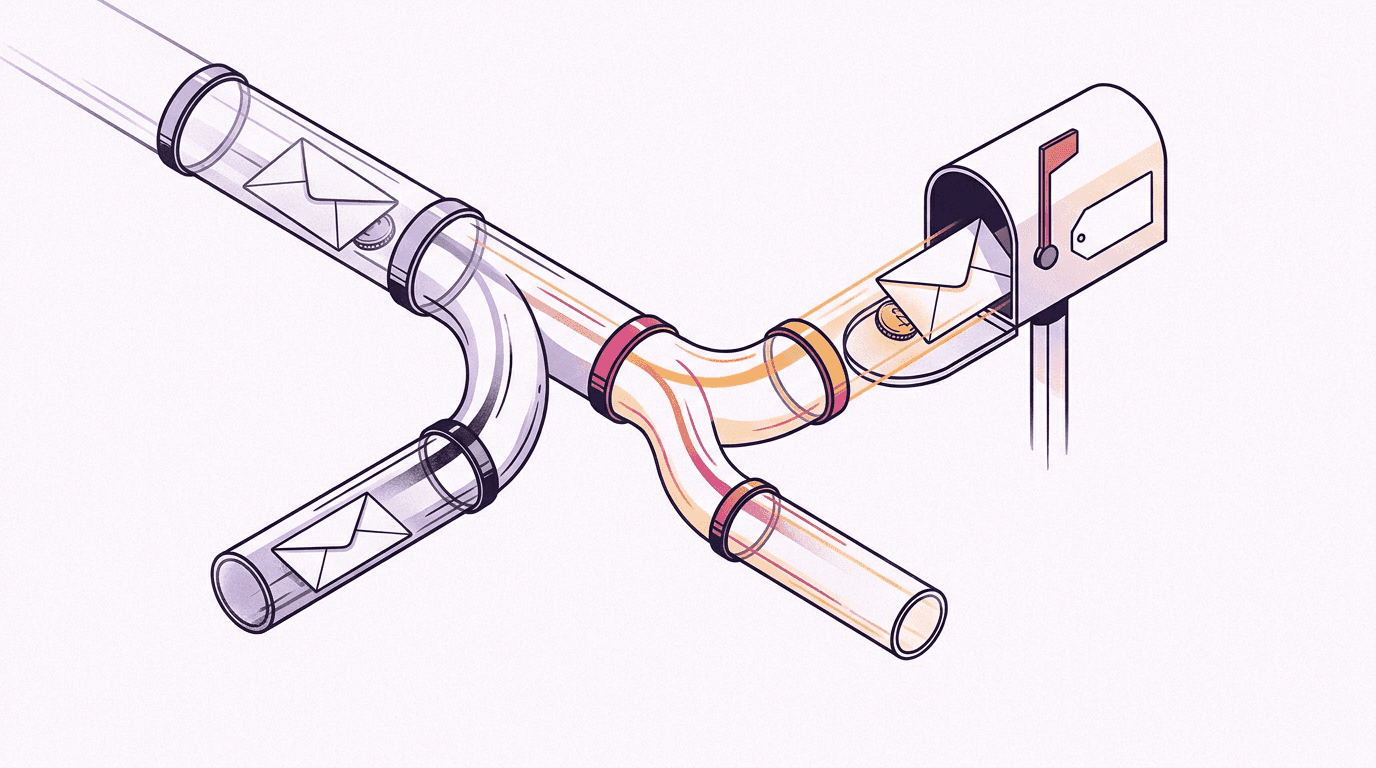
On TON every user sends to one platform address, and the 8-character memo tells the system whose deposit it is. Solana, BEP-20 and ERC-20 give each user a personal address, so nothing extra is needed. Without the memo, a TON deposit can only be matched by hand.
How long does a USDT top-up take to show on my balance?
Usually a minute or two on Solana, TON and BNB Smart Chain, and a few minutes on Ethereum. Exchange processing can add more on top: some exchanges review or batch withdrawals before they hit the chain at all.
Is my balance kept in USDT, and can it lose value?
The balance is in US dollars, converted at the rate when the deposit confirms. After that it doesn't move with any coin's price, and it doesn't expire.
What's the cheapest way to buy AI credits with USDT?
Withdraw on Solana or BEP-20 from an exchange with a low flat fee, send at least $50 for the 5% bonus, and activate a promo code for another 10%. Then the cheapest image models on our price list work out to about 2.6 cents each, or 2.5 cents once you deposit $100.