Prompt library · Comic panels

Comic panel prompts that tell a story on one page

Ten tested prompts for multi-panel comic pages and strips: Franco-Belgian clear line, screentone manga, noir brush ink, a newspaper gag strip, a vertical webcomic, a two-colour zine. Unedited outputs, with the balloons left blank for your own lettering.

01How to prompt

How do you prompt for a comic page with several panels?

Write it the way a writer scripts a page for an artist: the layout first, then one beat per panel, then the drawing tradition. The layout is a count and a grid, as in “six equal panels in a three-row grid with clean white gutters”. The beats are tied to positions on the page: “top row, she collects a parcel at a bakery door and sets off; middle row, she swerves around a fruit cart and crosses a stone bridge; bottom row, she climbs a hill of pastel houses and hands the parcel to a waving old man”. One generation returns the whole page, with borders and gutters drawn in.

Two things separate a comic page from six small illustrations. The first is the camera. Give each panel a different shot (a wide establishing view, a close-up of a shoe, a figure seen from behind) and the page starts to read as a sequence. The second is the ink. “Uniform black outlines, flat unshaded colour, no hatching” is the clear-line school; “grey dot screentone” with speed lines is manga; “pure black brush ink on white with no greys” is noir. Name those decisions and the tradition arrives with them. Every page below is the unedited first output of the prompt next to it, generated on BananaBanana. Panel count and arrangement came back as scripted on all ten. The one miss was shape: the zine's “square” panels came out tall.

Can you publish or print a comic made this way?

Yes, with three limits worth knowing before you plan a book. You own the pages you generate on BananaBanana, and a one-page strip, a zine spread, a pitch page or a storyboard is a realistic job. The lettering is not. Image models still write unreliable text inside speech balloons, a doubled letter here and an invented word there, and the balloon is exactly where a reader looks. So the prompts on this page ask for blank balloons and caption boxes, or for none at all, and the dialogue goes in afterwards in any editor with a comic font. Professional pages are made the same way; lettering is its own stage.

The second limit is continuity. One generation is one page. Inside it the lead held from panel to panel in our tests: same red jacket, same helmet, same orange cat. Page two is a new generation and, from text alone, a new face. A recurring cast needs reference images: generate a character sheet once, attach it to every later page and describe only the new action (our guide to character-consistent generation walks through it). Third, keep the cast your own. Requests for existing characters and franchises are refused or come back as lookalikes you can't publish, and a style should be named as a tradition, such as Franco-Belgian clear line or mid-century newsstand comics, never as a living artist.

02The prompts

10 prompts, real results

Every image below is the unedited output of the prompt on its card — no cherry-picking across dozens of attempts, no retouching. The model badge shows exactly what generated it and what it cost.

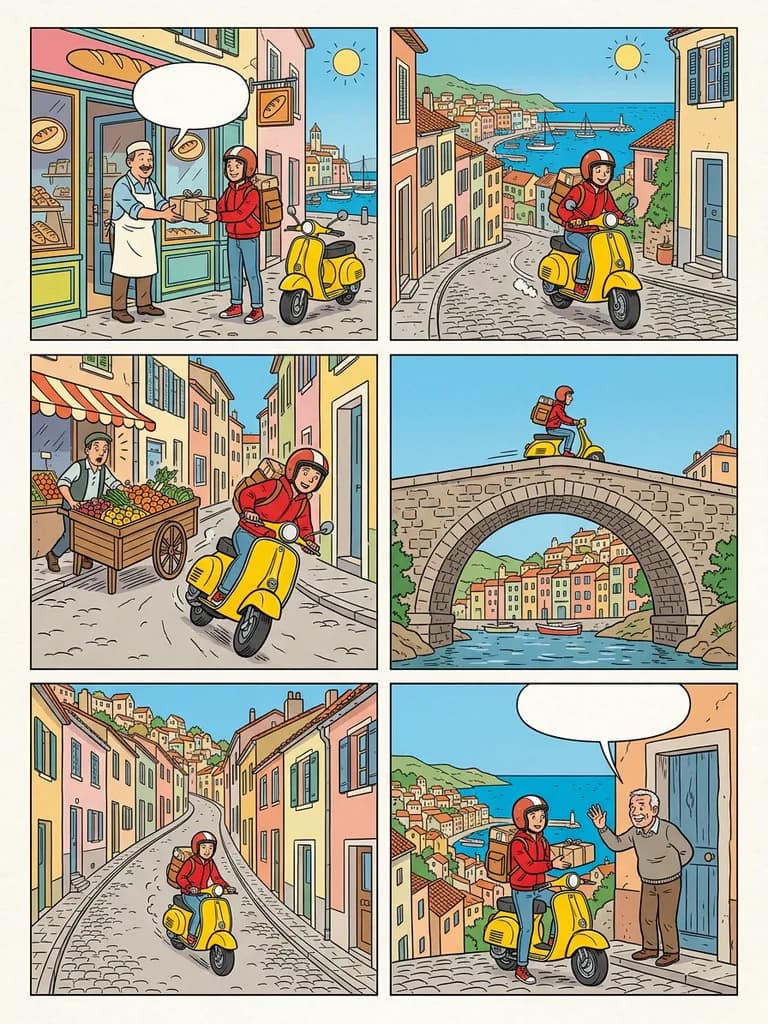
AI-generated comic panels example — Clear line — harbour courier, made with Nano Banana 2 on BananaBanana

Clear line — harbour courier

Nano Banana 2$0.06 / image

A full comic page in the Franco-Belgian clear-line tradition, six equal panels in a three-row grid with clean white gutters. A young courier in a red jacket rides a yellow scooter through a sunny harbour town: top row, she collects a parcel at a bakery door and sets off; middle row, she swerves around a fruit cart and crosses a stone bridge; bottom row, she climbs a hill of pastel houses and hands the parcel to a waving old man. Uniform black outlines, flat unshaded colour, no hatching. One blank white speech balloon in the first and last panels. No text, letters or numbers anywhere in the image.
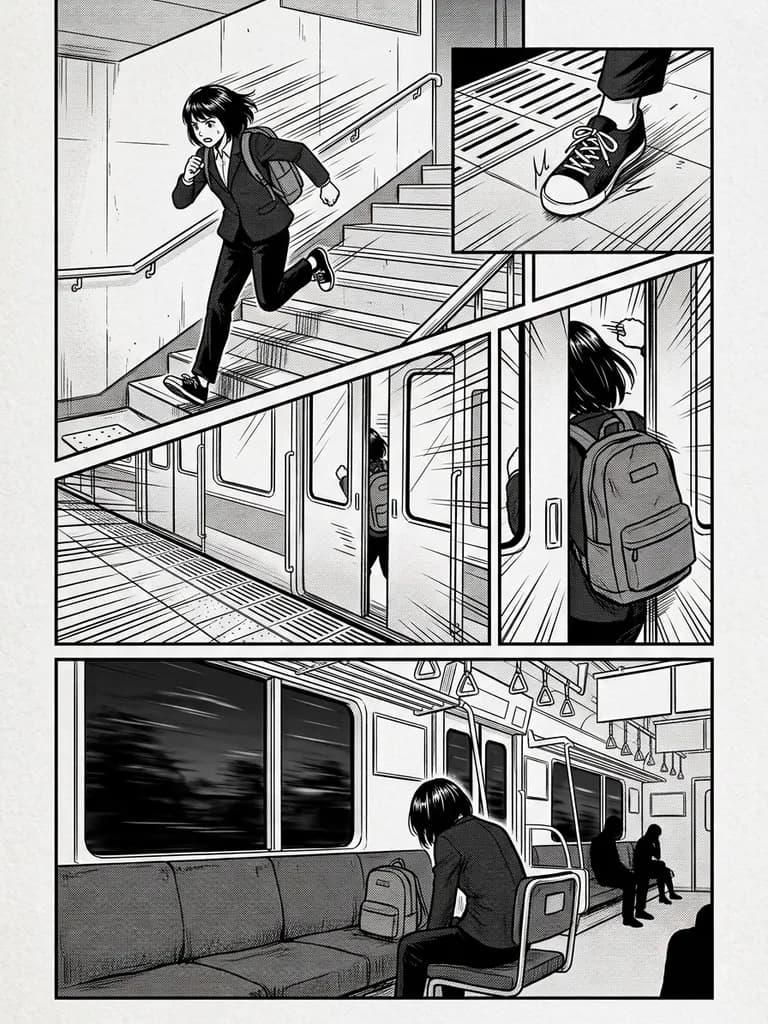
AI-generated comic panels example — Manga — the morning train, made with Nano Banana 2 on BananaBanana

Manga — the morning train

Nano Banana 2$0.06 / image

A wordless black-and-white manga page with screentone shading and five panels with thin white gutters. A student with a short bob, in a blazer, trousers and a backpack, races for the morning train: a tall panel of her sprinting down empty station stairs, a small inset of her sneaker hitting the platform edge, a diagonal-cut panel of the train doors sliding closed, a close-up of her backpack squeezing through the gap, and a wide bottom panel of her slumped on a carriage seat, seen from behind. Crisp ink, grey dot screentone, blank walls and signs, motion shown only by straight speed lines. No text, letters or numbers anywhere in the image.
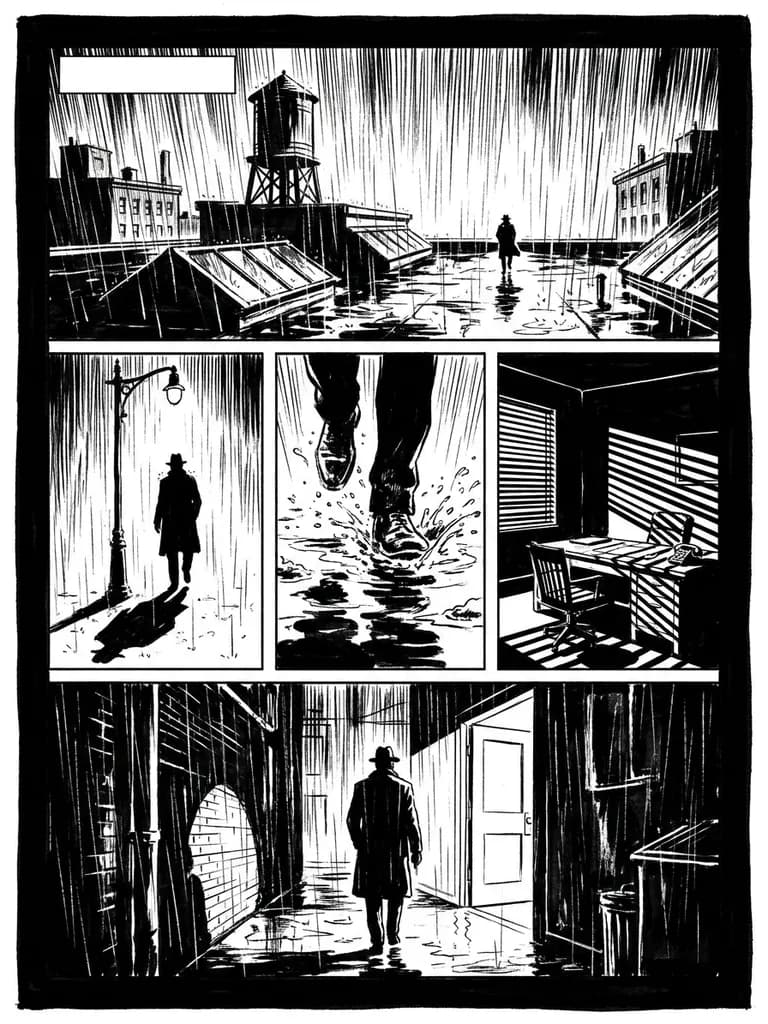
AI-generated comic panels example — Noir ink — rain and blinds, made with Nano Banana Pro on BananaBanana

Noir ink — rain and blinds

Nano Banana Pro$0.11 / image

A comic page in the American noir tradition, drawn in pure black brush ink on white with no greys, five panels with heavy black borders. A detective in a long coat and brimmed hat, face always in shadow, walks through a rain-soaked city at night: a wide establishing panel of wet rooftops and a water tower, a narrow vertical panel of his silhouette under a streetlamp, a close-up of shoes splashing a puddle, an empty office striped with window-blind shadows, and a final wide panel of him seen from behind facing a lit doorway. Bold spotted blacks, stark negative space, one blank white caption box in the top corner. No text, letters or numbers anywhere in the image.
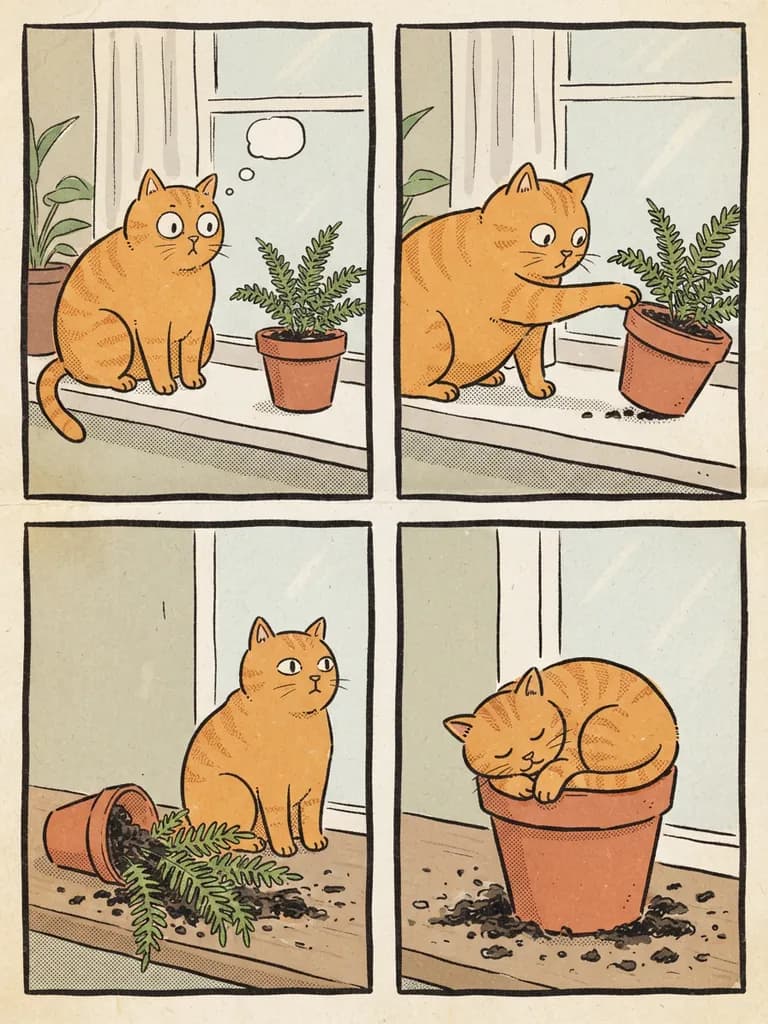
AI-generated comic panels example — Gag strip — cat and fern, made with Nano Banana 2 Lite on BananaBanana

Gag strip — cat and fern

Nano Banana 2 Lite$0.03 / image

A four-panel newspaper gag strip arranged as a two-by-two grid on slightly yellowed newsprint, drawn with a loose felt-tip line and flat colour under coarse halftone dots. A round orange cat eyes a small potted fern on a windowsill: first panel, the cat stares at the plant; second, one paw creeps towards the pot; third, the pot is tipped over and soil is scattered while the cat looks away innocently; fourth, the cat sleeps curled inside the empty pot. Simple backgrounds, thick panel borders, one small blank white thought bubble above the cat in the first panel. No text, letters or numbers anywhere in the image.
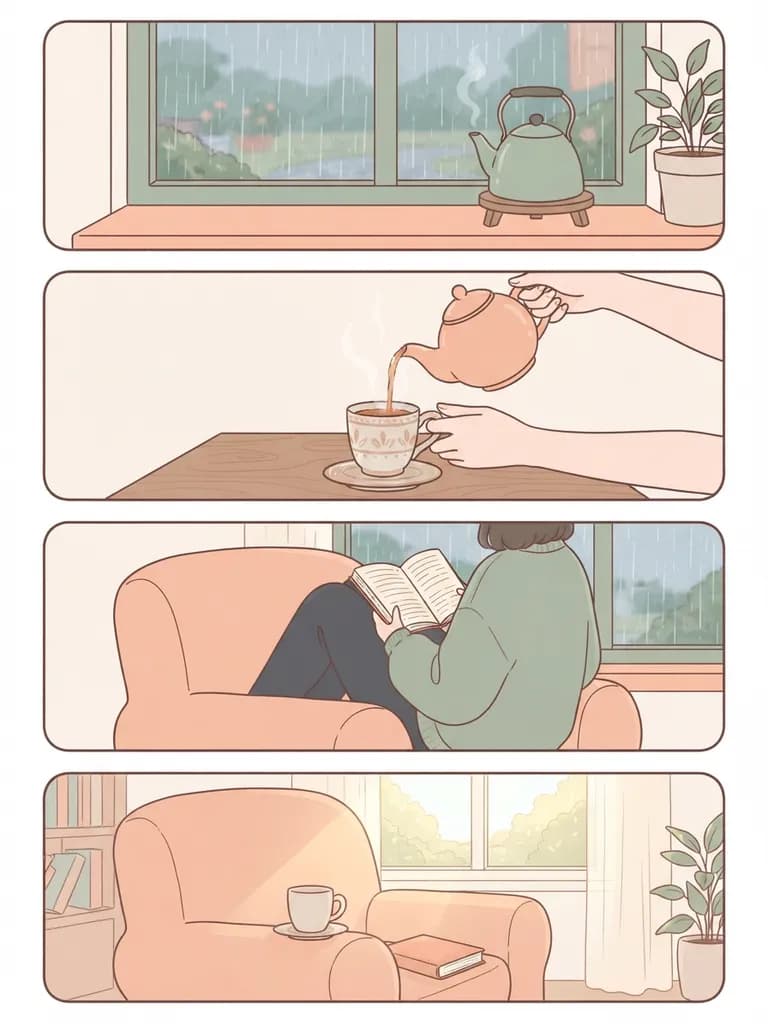
AI-generated comic panels example — Webcomic — rainy afternoon, made with Nano Banana 2 Lite on BananaBanana

Webcomic — rainy afternoon

Nano Banana 2 Lite$0.03 / image

A vertical-scroll webcomic strip of four stacked wide panels with generous white gutters between them, drawn in soft flat pastel colours with thin brown outlines and no shading. A quiet rainy afternoon at home: the top panel shows rain on a window with a kettle steaming beside it, the second shows two hands pouring tea into a mug, the third shows a person in an oversized sweater seen from behind settling into an armchair with a book, the last shows the empty mug on the armrest as the rain stops and sun breaks through the window. Cosy slice-of-life mood, rounded panel corners, peach and sage palette. No text, letters or numbers anywhere in the image.
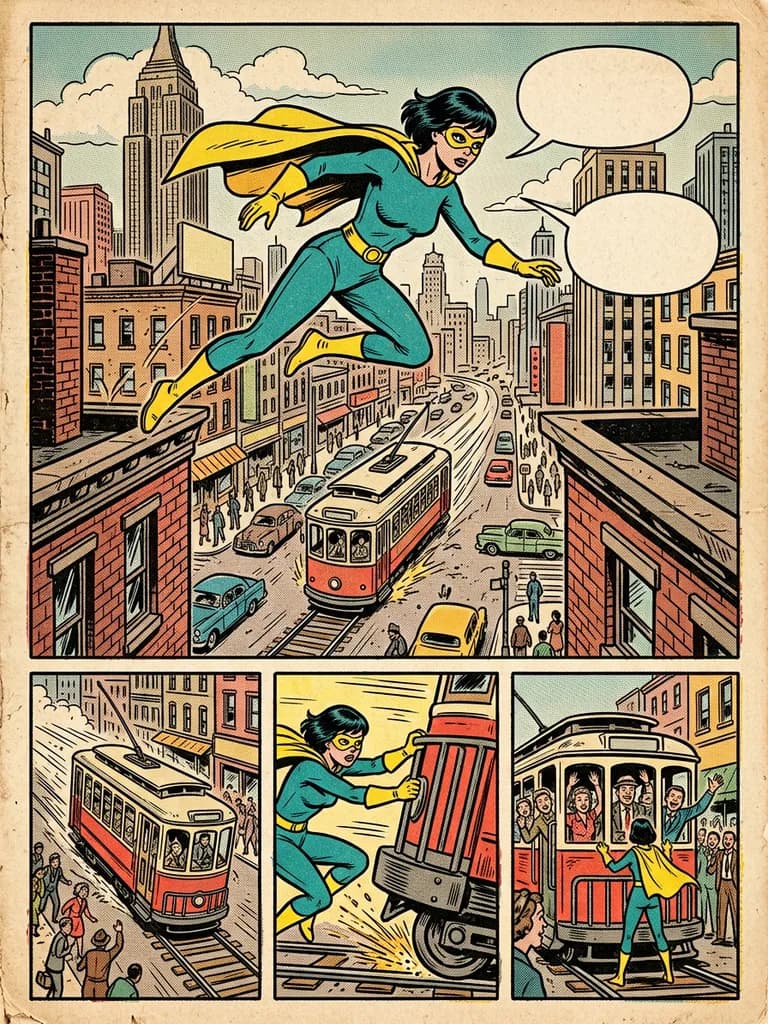
AI-generated comic panels example — Newsstand hero — tram rescue, made with Nano Banana 2 on BananaBanana

Newsstand hero — tram rescue

Nano Banana 2$0.06 / image

A superhero comic page in the mid-century American newsstand tradition, with a printed look of visible Ben-Day dots, slightly off-register primary colours and aged paper. An original hero in a teal jumpsuit, short yellow cape and plain domino mask rescues a runaway tram: a large splash panel fills the top half as she leaps between rooftops above the city, and three smaller panels below show the tram rolling downhill, her gloved hands gripping its rear rail, and passengers cheering from the windows as it stops. Bold black outlines, dynamic foreshortening, blank chest with no emblem, two empty white speech balloons. No text, letters, numbers or sound-effect lettering anywhere in the image.

AI-generated comic panels example — Sci-fi album — desert dome, made with Nano Banana Pro on BananaBanana

Sci-fi album — desert dome

Nano Banana Pro$0.11 / image

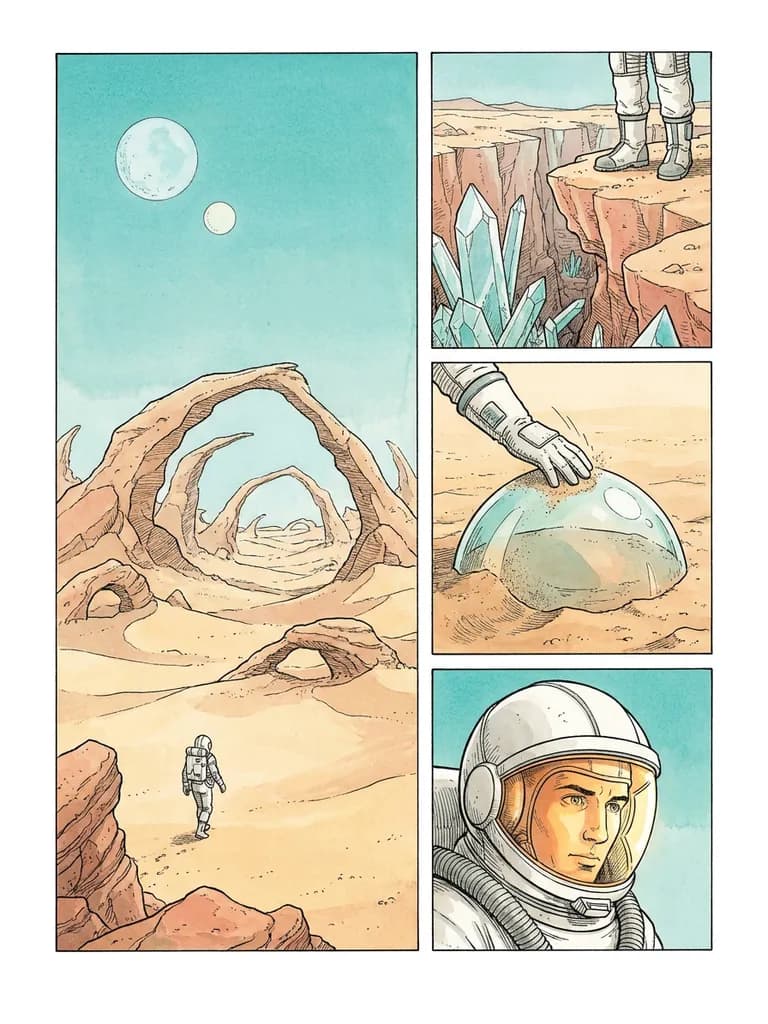
A comic page in the 1970s European science-fiction album tradition, fine pen hatching with flat washes of sand, coral and turquoise. Four panels: a tall panel on the left runs the full height of the page and shows a tiny explorer in a white pressure suit crossing a vast desert of wind-carved rock arches under two pale moons; three stacked panels on the right show the explorer's boots at the edge of a crystal canyon, a gloved hand brushing dust from a half-buried glass dome, and warm light from inside the dome reflecting on the helmet visor. Precise thin outlines, immense scale, calm and mysterious. No text, letters or numbers anywhere in the image.
AI-generated comic panels example — Wordless watercolour — lighthouse, made with Nano Banana Pro on BananaBanana

Wordless watercolour — lighthouse

Nano Banana Pro$0.11 / image

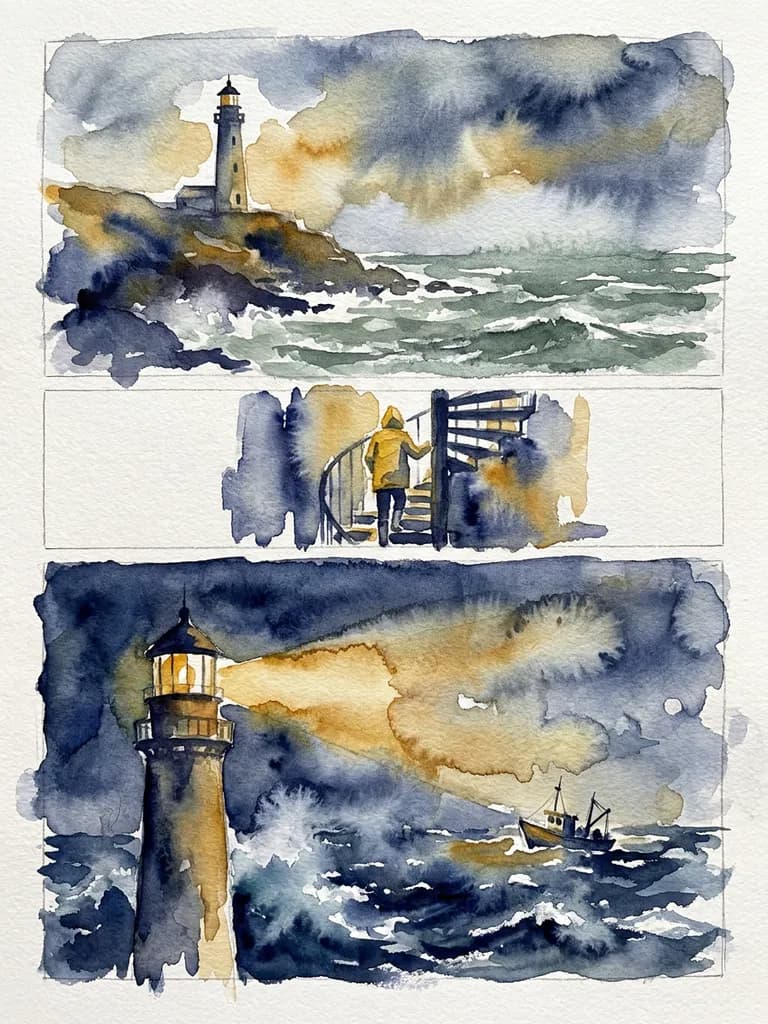
A wordless graphic-novel page painted in loose watercolour on textured cold-press paper, with soft hand-drawn pencil panel borders and no balloons. Three panels stacked vertically tell one evening at a lighthouse: a wide top panel of the tower on a rocky headland as storm clouds gather over a grey-green sea, a narrow middle panel of a keeper in a yellow raincoat climbing the spiral stairs seen from behind, and a large bottom panel of the lamp sweeping a warm gold beam across dark waves towards a small fishing boat. Wet-on-wet washes, visible pigment blooms, restrained indigo and ochre palette. No text, letters or numbers anywhere in the image.
AI-generated comic panels example — Riso zine — dawn ride, made with Nano Banana 2 Lite on BananaBanana

Riso zine — dawn ride

Nano Banana 2 Lite$0.03 / image

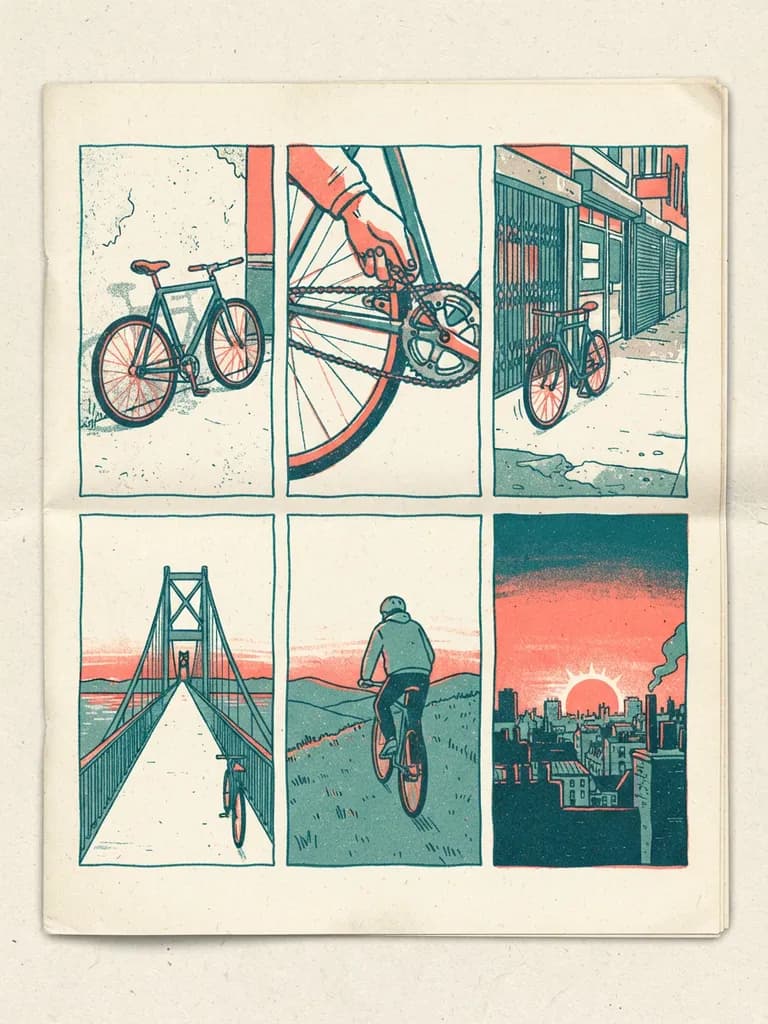
A page from an indie comic zine printed in two-colour risograph, fluorescent coral and deep teal on cream paper with grainy, slightly misregistered ink. Six small square panels in a loose hand-ruled grid follow a bicycle ride at dawn: a bike leaning on a wall, a hand lifting the chain off its frame, wheels rolling past shuttered shops, a long empty bridge, the rider seen from behind cresting a hill, and the sun rising over rooftops. Simple naive shapes, chunky wobbly outlines, flat overlapping colour, lots of paper showing through. No text, letters or numbers anywhere in the image.
AI-generated comic panels example — How-to comic — repotting, made with Nano Banana 2 on BananaBanana

How-to comic — repotting

Nano Banana 2$0.06 / image

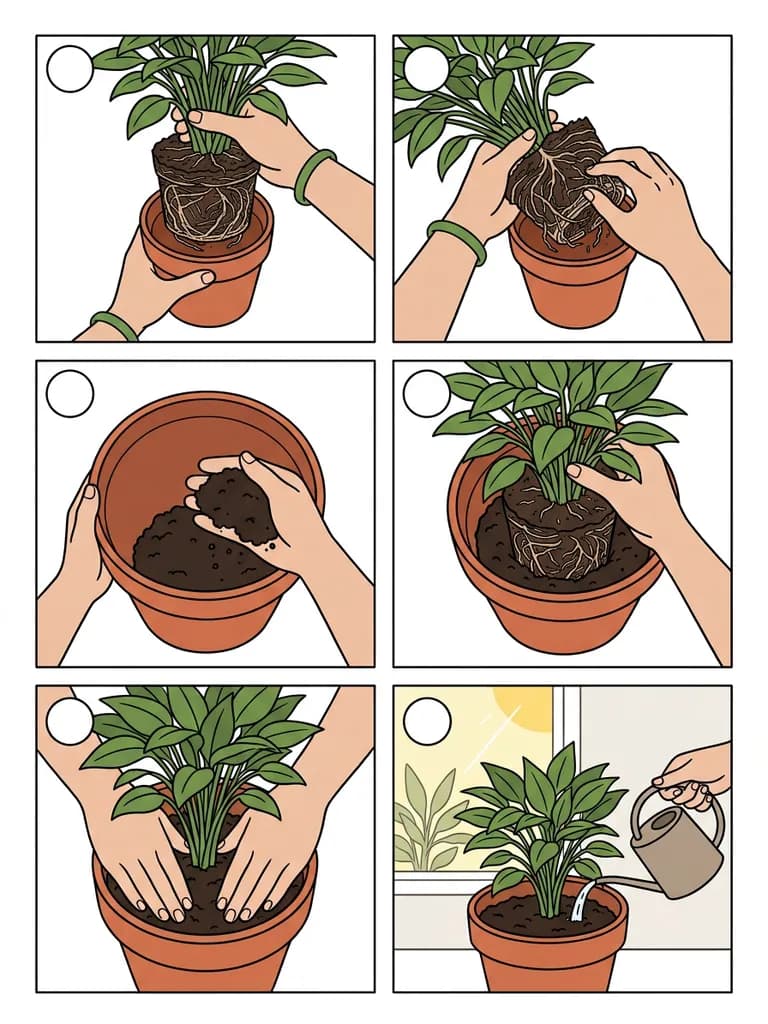
An instructional comic page of six equal panels in a tidy two-column grid with wide white gutters, drawn in clean vector-style line with flat colour in terracotta, leaf green and warm grey. The sequence shows how to repot a houseplant using hands only: lifting a root-bound plant from a small pot, loosening the roots with fingers, adding fresh soil to a larger terracotta pot, lowering the plant in, pressing the soil down around the stem, and watering it with a small can by a sunny window. Consistent overhead angle, the same plant and pots in every panel, a blank circle in each panel's top corner for a step number. No text, letters or numbers anywhere in the image.
03Technique

What makes these work

Count the panels and place them

“A tall panel on the left runs the full height of the page”, “a large splash panel fills the top half”, “four stacked wide panels”: position words produced the scripted layout on every page here. I anchor each beat to a row, a column or a corner instead of writing “panel 1, panel 2”, which puts digits into a prompt that is trying to keep digits off the page.

Say where the empty balloons go

“One blank white speech balloon in the first and last panels” returned exactly two, in those panels, tails pointing at the baker and the old man. The noir caption box and all six step circles on the how-to page stayed blank too. Placing them in the prompt means the art is composed around your dialogue instead of under it.

Pin the props, not only the hero

Characters stayed consistent across panels. Props drifted. On the webcomic a green kettle becomes a peach teapot one panel later and the patterned cup ends up plain; on the how-to page two green bracelets vanish after the second panel. If an object carries the story, give it a colour and repeat it: “the same white mug in every panel”.

Describe silence instead of banning noise

The manga page took three prompts. The first drew a close-up hand with four fingers. The second said “no sound-effect lettering” and came back with katakana-style effect strokes slashed across two panels anyway. What worked was calling the page “wordless”, asking for “motion shown only by straight speed lines”, and swapping the hand for a backpack.

04More prompts

Keep browsing

05Learn more

Guides from the blog

06FAQ

Comic panels prompts, answered

Can the model write the dialogue inside the balloons?

Not reliably. A short word may come out right, but a full line of dialogue usually carries at least one slip, and you can't fix a single letter without regenerating the whole page. Blank balloons cost nothing. Lettering in an editor takes minutes, and it lets you translate the same page into another language later without touching the art.

How do I keep the same character on every page?

With reference images. Text alone gives you a consistent lead inside one page and a slightly different person on the next. Generate a clean character sheet first, attach it to each new page and describe only what happens there. Nano Banana 2 takes up to 4 character references and Pro up to 5; Lite doesn't hold a character from references, so keep it for drafts. Our blog guide on character-consistent image generation covers the full workflow.

Which model should I use?

Nano Banana Pro ($0.11) where the ink or the paint is the point: the noir page with its pure blacks and blind shadows, the hatched sci-fi album page and the watercolour lighthouse above. Nano Banana 2 at $0.06 drew the pages with the most continuity to hold, namely the clear-line courier, the manga, the newsstand hero and the how-to. Lite at $0.03 handled the gag strip, the webcomic and the zine, and it's what I'd use to test any layout first. You top up a balance with crypto from $1 or by card from $20; there's no subscription.

What size do I need for print or a vertical webcomic?

These examples are 3:4 at 1K, which is enough for a screen. A standard comic page printed at 300 dpi needs roughly 2000×3000 pixels, so render the final at 4K: $0.13 on Nano Banana 2, $0.20 on Pro (Lite stops at 1K). For a phone-first vertical strip, switch to 9:16 and stack several generations in an editor. One caveat from our results: the zine and the watercolour came back as photographs of a paper sheet, fold and margins included. For print, ask for a flat scan that fills the frame.

Can I use an existing character or a famous artist's style?

No to both. Franchise characters are refused, or you get a lookalike you have no right to publish. For style, name the tradition and its ink decisions: “Franco-Belgian clear-line tradition”, “mid-century American newsstand tradition” and “1970s European science-fiction album tradition” produced pages above. A living artist's name is imitation, and it's also a weaker instruction than “uniform black outlines, flat unshaded colour”.

Copy a prompt, make it yours

Every new account starts with a free $0.20 balance — enough to test six image prompts before paying anything. No subscription — top up with crypto from $1 or a card from $20.