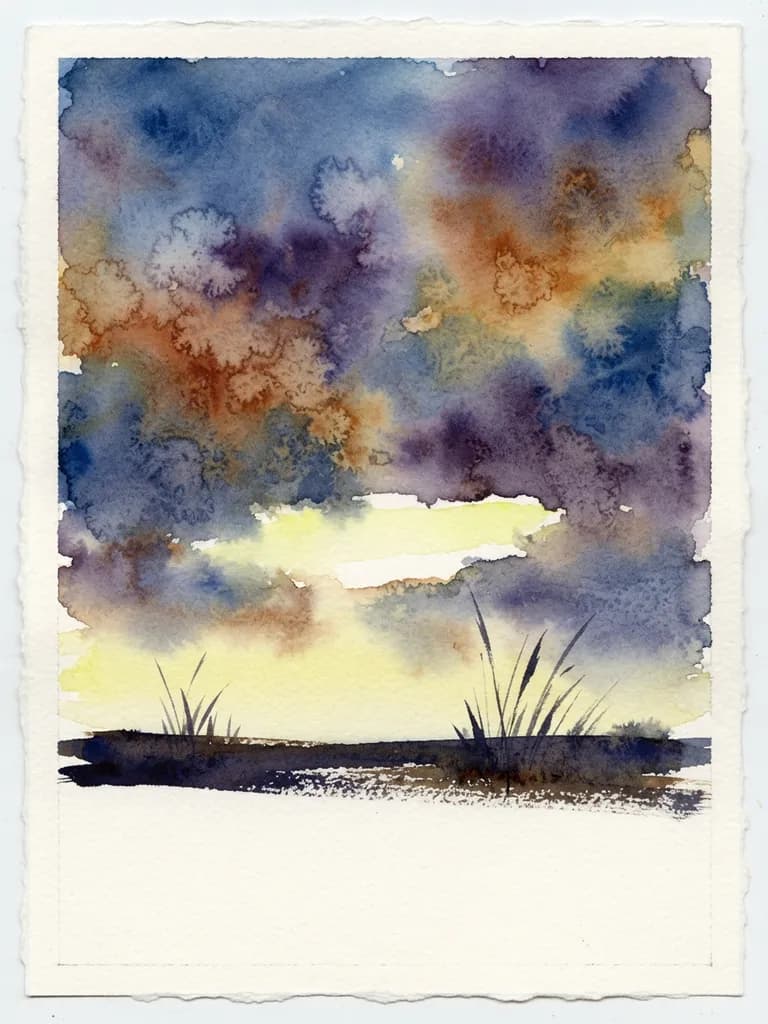
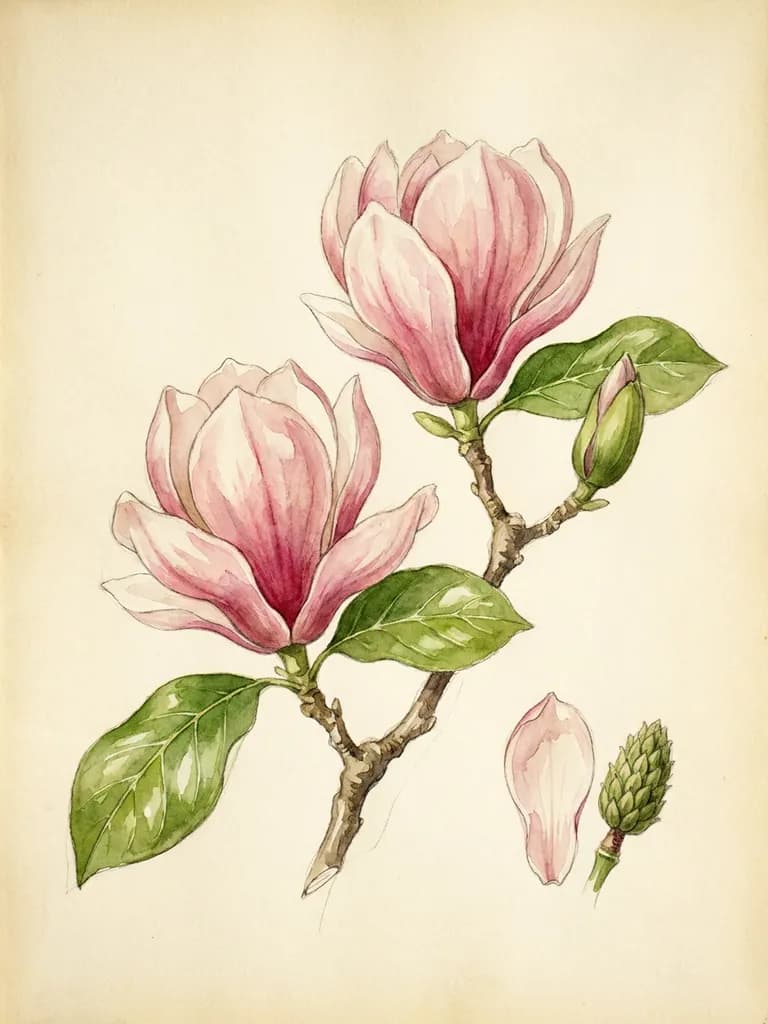
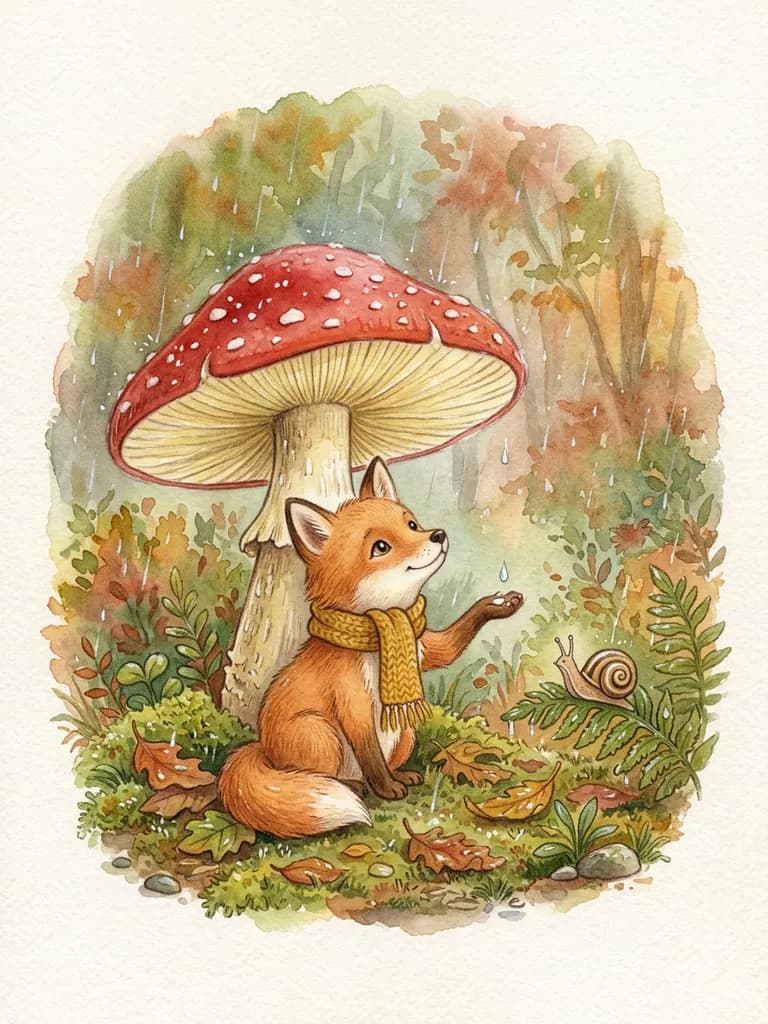
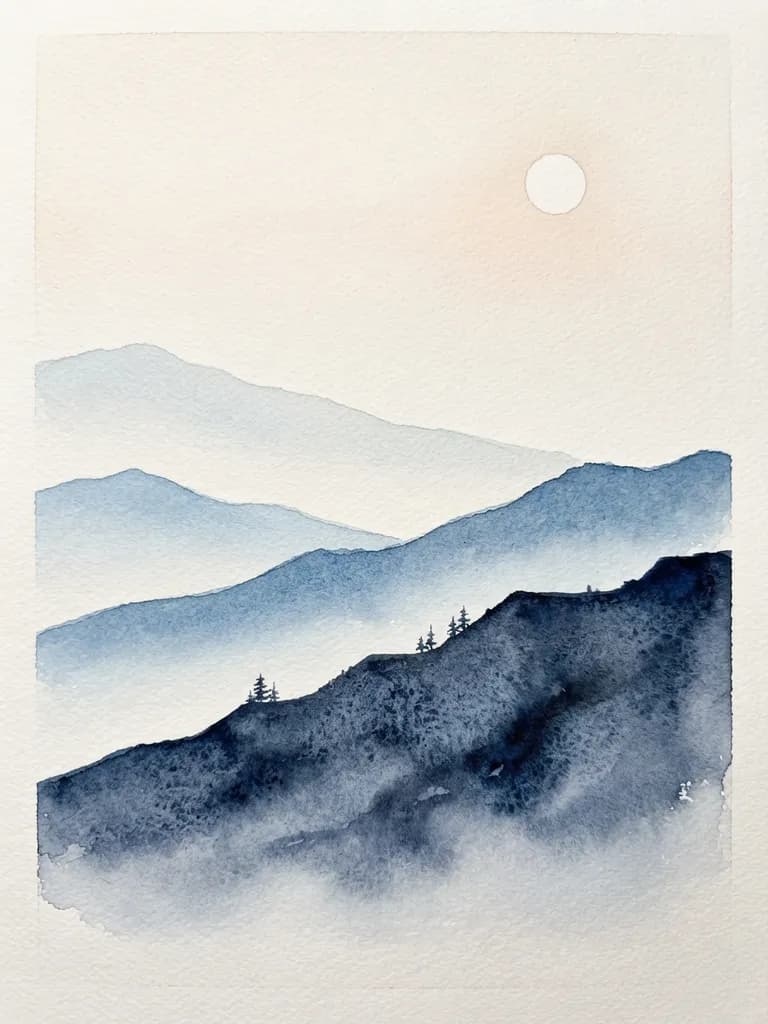
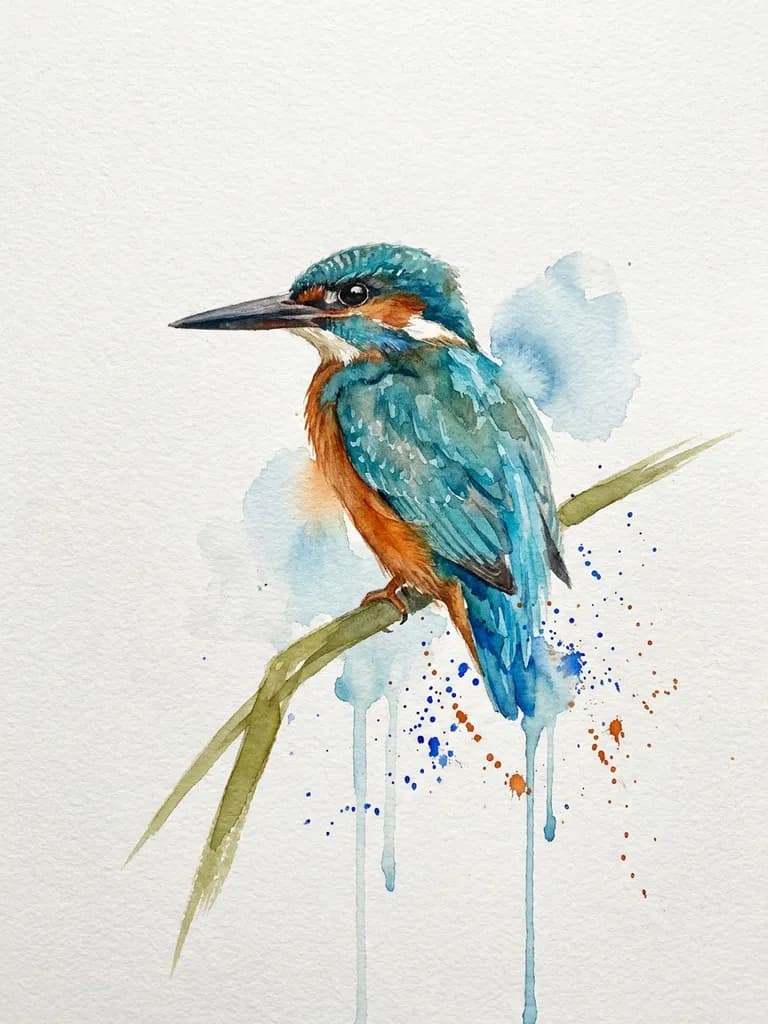
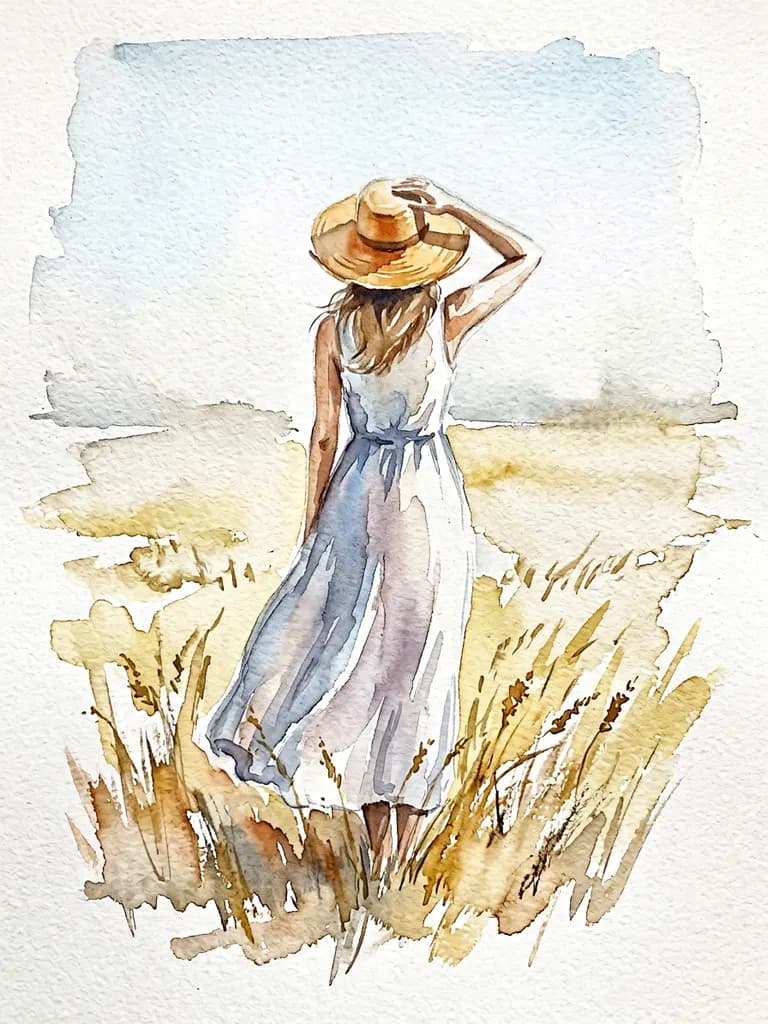
Describe what the water did, not the style. “Watercolor style” on its own returns a digital painting with a paper filter over it: even colour, an outline around everything, every corner filled in. A real watercolor is recognised by its accidents and by what the painter left out, so spell those out: “painted wet-on-wet, indigo and burnt sienna clouds bleeding softly into each other, a pale lemon gap near the horizon where the white paper glows through, cauliflower blooms where wet paint met drying paint, pigment granulating in the paper's grain”. Four kinds of word carry it: how wet the paint was (wet-on-wet, glazes, dry-brush), what the edges do (hard, soft, lost), which accidents happened (blooms, backruns, drips, splatter) and the paper. Cold-pressed is rough and grainy. Hot-pressed is smooth and suits botanical work.
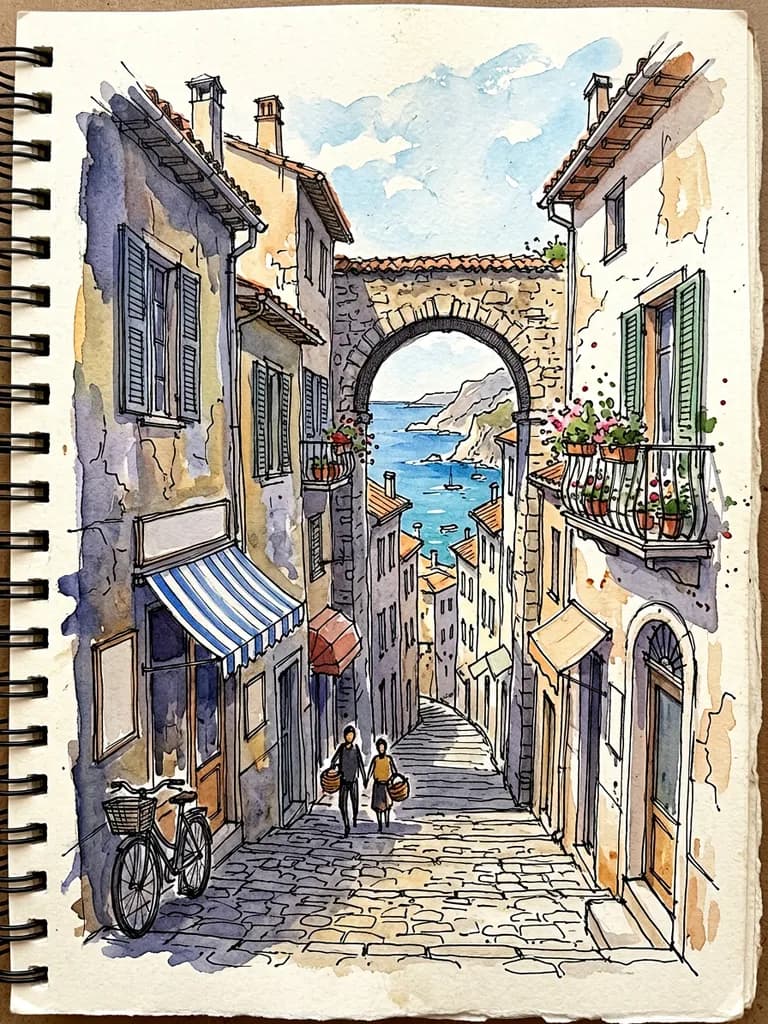
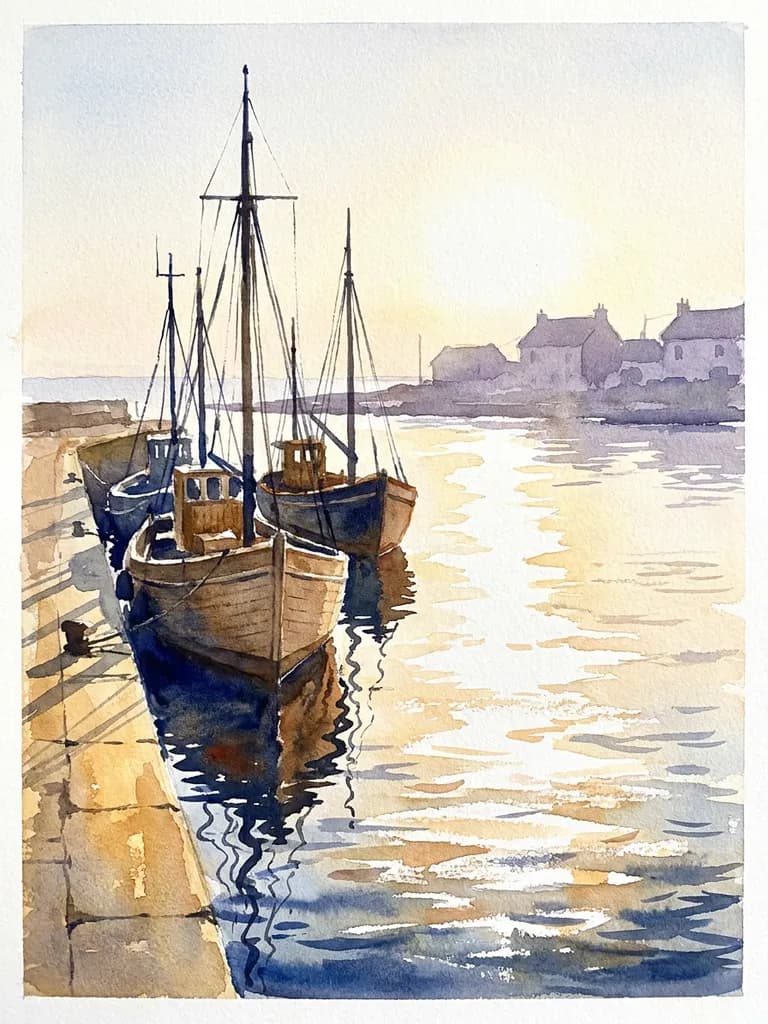
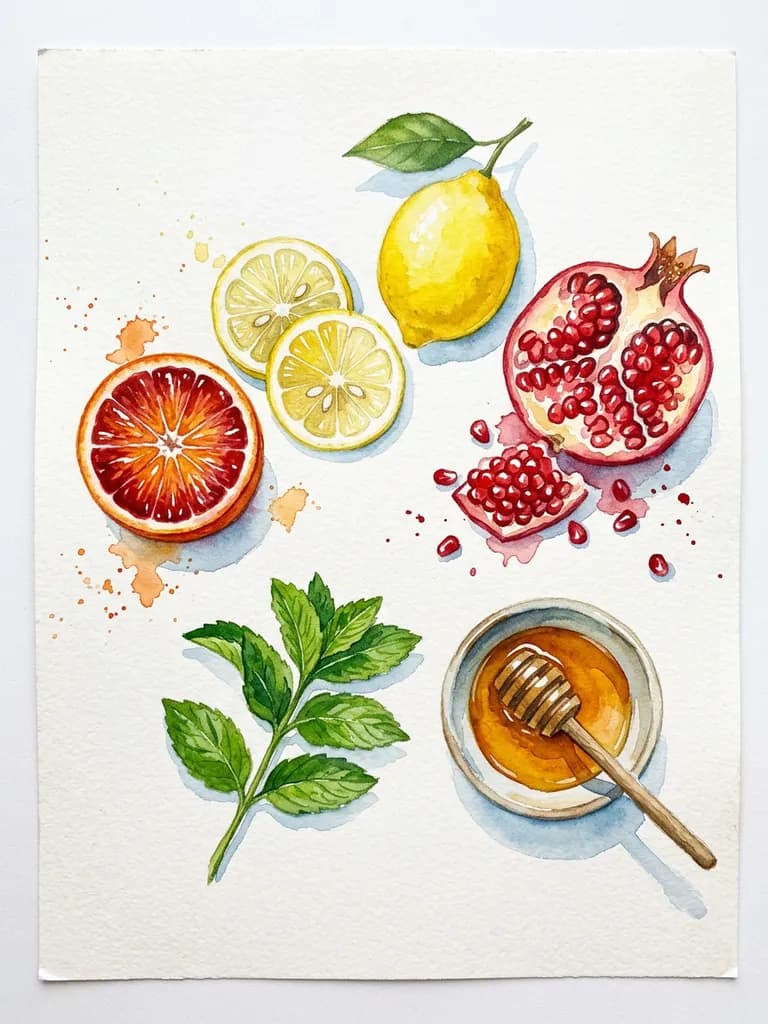
Then say where the paint stops. Transparent watercolor has no white pigment, so the brightest thing in a painting is paper nobody touched: the sun's path on water, the highlight on a wet orange, a sunlit wall. Name those areas as “left as bare paper” and the image stops looking airbrushed. On the harbour below it worked better than I expected. Be as explicit about the contents, too. My first street sketch came back with a passer-by walking a pet, a cat on a balcony and a bell tower closing the view, none of which I'd asked for, so the version here says what's at the end of the street. Every image is the unedited first output of the prompt printed beside it, generated on BananaBanana.