Midjourney Alternative Without a Subscription (2026)
A Midjourney alternative with no monthly plan: Nano Banana images from $0.03, Veo video from $0.10, paid from a prepaid balance that never expires.

BananaBanana is a pay-per-generation Midjourney alternative built on Google's image and video models: Nano Banana 2 and Nano Banana Pro for stills, Veo 3.1 and Gemini Omni Flash for clips. There is no monthly plan. You top up a balance, each generation deducts its listed price, and whatever is left sits there until you spend it.
If you're mid-comparison right now, the honest short version:
- Midjourney has no free tier and no pay-as-you-go door. Plans start at $10/month and run to $120. Here the floor is a $1 top-up, and registration already credits $0.20.
- Images cost $0.03 to $0.20 apiece depending on model and resolution. Nano Banana 2 at 1K is $0.06; Nano Banana Pro is $0.11 flat at 1K and 2K.
- Midjourney's Standard plan and up include unlimited Relax generation. At high volume that beats any per-image price, and I won't pretend otherwise.
- Payment is crypto from about $1, or card, PayPal and SEPA from $20. Nothing stays on file, nothing renews. That matters a lot if you live where international card payments are unreliable.
- Video sits on the same balance: a 4-second silent 720p Veo 3.1 Lite clip is $0.10.
- An MCP endpoint lets Claude Code, Cursor and similar agents generate against that same balance. Midjourney has no public API.
Where Midjourney still wins is style, so that section goes first. For most people it decides the whole question.
What is Midjourney genuinely better at?
Aesthetic, mostly, and it isn't close.
Midjourney's models produce a particular painterly look straight out of a short prompt: richer color, better instinct for composition, an opinion about what a picture should feel like. Nano Banana Pro is the stronger instruction-follower, and it renders legible text inside the frame, which Midjourney still fumbles. But hand both a four-word prompt and ask for something beautiful, and Midjourney wins more often than not. That's a taste judgment. You're free to disagree, though after a few hundred side-by-side prompts I'd say it holds.
The reference system is the other real gap. --sref locks a style across a whole series from one reference image, and the style tuner turns that into a repeatable visual identity that survives across sessions. V7 replaced Character Reference with Omni Reference (--oref); per Midjourney's Character Reference documentation, --cref now applies only to V6 and Niji 6 workflows. Nothing here maps one-to-one onto those parameters. Nano Banana Pro will carry a character across images if you feed it references and describe the person carefully, and it's genuinely good at it, but that's descriptive work rather than a knob you turn.
Then there's the web editor: inpaint, outpaint, retexture, all on canvas. And the Explore feed, where everyone's prompts are visible. As a place to learn prompting, no paid platform I've used comes close.
None of that is what this comparison argues with.
What does a Midjourney subscription cost in 2026?
A caveat first. midjourney.com/pricing returns 403 to automated requests, so I couldn't pull it the way I normally verify a competitor's numbers. The figures below are the ones every 2026 pricing tracker agrees on, eesel's breakdown included, and the tier structure has been stable for years. Check the live page before you act on them.
| Plan | Price/mo | Annual (per mo) | Fast GPU hours | Relax mode |
|---|---|---|---|---|
| Basic | $10 | ~$8 | 3.3 | No |
| Standard | $30 | ~$24 | 15 | Unlimited |
| Pro | $60 | ~$48 | 30 | Unlimited |
| Mega | $120 | ~$96 | 60 | Unlimited |
Annual billing takes 20% off. Stealth mode, which keeps your generations private, starts at Pro. Extra Fast hours run $4/hour when you dry out, and unused Fast hours expire at the end of every billing cycle on monthly and annual plans alike.
A basic image job burns roughly one Fast GPU minute, so Basic's 3.3 hours lands somewhere near 200 jobs. Video is much heavier: Midjourney's V1 model animates a still into 5-second 480p clips at something like eight image jobs' worth of GPU time, which is why nobody sensibly budgets video on a Basic plan.
The number that actually decides things isn't the per-image rate, though. It's the floor. Ten dollars is the minimum you spend in a month where you made three pictures, and $30 is the minimum if you want Relax mode so you can't run out mid-project.
What does pay-per-image cost instead?
Every price here is per generation, with no plan attached:
| Model | Resolution | Price per image |
|---|---|---|
| Nano Banana 2 Lite | 1K | $0.03 |
| Nano Banana 2 | 512px / 1K / 2K / 4K | $0.03 / $0.06 / $0.09 / $0.13 |
| Nano Banana Pro | 1K and 2K | $0.11 |
| Nano Banana Pro | 4K | $0.20 |
So $10 buys about 166 images at 1K on Nano Banana 2, or 90 on Pro. Thirty dollars buys 500 and 272 respectively. Those are the break-even lines against Basic and Standard, near enough.
Top-up bonuses move them further. Crypto deposits of $50 or more add 5% extra balance, $100 or more adds 10%, and an active promo code adds another 10% of the deposit on every top-up regardless of how you pay. Both bonuses are calculated from the same base amount and simply added together, so $100 with a code credits $120. That pulls Nano Banana 2 at 1K down to an effective $0.05 and Pro to roughly $0.09, which pushes break-even against a $30 Standard plan out to about 600 and 327 images a month.
Video rides the same balance, and that's the part people usually don't expect. A 4-second silent 720p clip on Veo 3.1 Lite is $0.10. Veo 3.1 Fast runs $0.35 to $0.70 for silent 720p or 1080p, and the top of the range (8 seconds, 4K, with audio, full Veo 3.1) is $4.40. Gemini Omni Flash bills $0.10 per second and always arrives with sound, so $0.30 to $1.00 a clip. Midjourney's video, by comparison, is image-to-video only, 480p, silent.
And the balance never resets. Take three months off and it's all still sitting there. That's the thing subscribers ask about most, and it's a one-word answer.
Can you pay without a card?
This is why a good share of readers land on a page like this, so let's be direct.
Midjourney bills like any SaaS subscription: a card on file, charged monthly. Fine if you hold one that works internationally and renews without drama.
Deposits here are crypto. USDT on TON or Solana from about $1, plus BTC, ETH and a couple dozen other coins. No card number, no billing address, no identity check. If you've never sent a stablecoin, the first attempt eats maybe fifteen minutes of figuring things out, and I'd call that the real switching cost rather than pretend it's frictionless. The crypto payment walkthrough goes through a first deposit step by step.
No crypto at all? Cards, PayPal and SEPA work on the site through PayPal Checkout, from $20 a payment, and the details go into PayPal's window rather than ours.
Where this really bites is availability. A subscription needs a card that renews successfully twelve times a year; a prepaid balance needs one transfer that lands once. Those are completely different failure modes, and in a lot of countries only the second one is achievable. The no-credit-card guide has more.
Can your coding agent generate the images?
Midjourney has no public API. Unofficial wrappers that drive the web app exist, and I'm not going to name them, because the fact that they're unofficial is the whole answer.
Here, MCP is a first-class surface. Point any MCP-capable client at the endpoint (Claude Code, Claude Desktop, Cursor, VS Code with Copilot, and whatever else speaks the protocol), authenticate with an API key from your profile or through OAuth, and the agent generates images, edits them, makes video and speech from the same balance. Same prices as the browser. No separate plan, no separate quota, no seat.
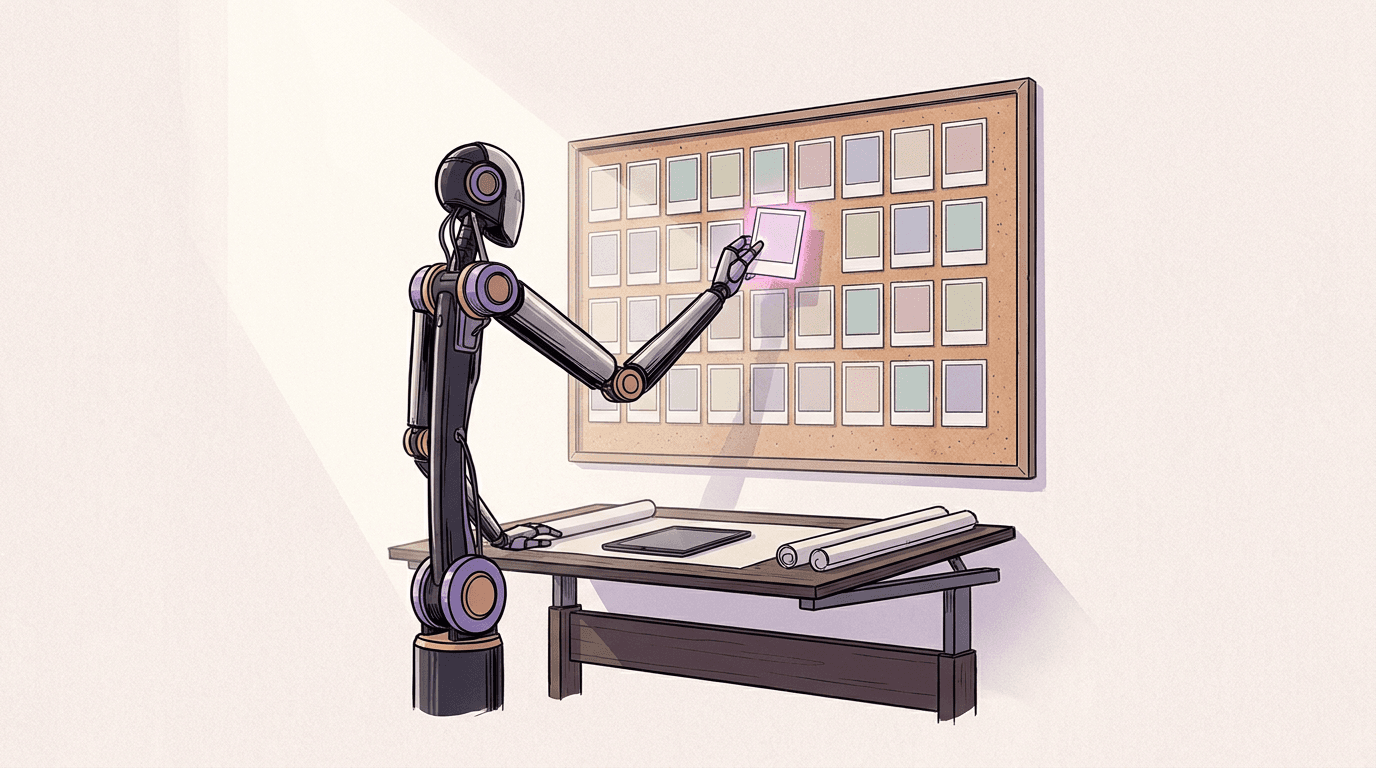
In practice that means asking Claude Code for the eight illustrations a landing page needs and getting eight files written into public/ while you keep working on something else. Every illustration in this post came out of exactly that pipeline, generated with Nano Banana Pro at $0.11 apiece. The one just below was a prompt describing a robotic arm placing a freshly printed picture onto a pinned grid. First take, no cherry-picking.
Each call is logged with its cost, and every key can carry a daily spending cap, which I'd set before letting any agent loose on a balance. There's also an x402 endpoint for agents that pay per call in USDC without holding an account at all. Niche. But it works.
So who should switch, and who shouldn't?
Stay on Midjourney if any of these is a yes. Its look is your look. Style consistency through --sref is load-bearing in your work. You reliably generate hundreds of images a month, so Relax mode is doing genuine work for you. The web editor's inpainting is part of how you finish a picture. The Explore feed is where you learn.
Switch, or run both, when your usage is bursty: heavy for one project week, then quiet for three. That pattern is exactly what a monthly plan punishes and a balance ignores. Same conclusion if you want stills and video billed from one place, if you can't or won't keep a card on file, or if you want an agent generating against the balance you already use in a browser.
Running both is what I'd actually suggest to most people whose answer is "some of each". Midjourney Basic at $10 for the pieces that need its aesthetic, a balance here for volume drafts, product shots where the text has to be readable, and video. The two aren't really competing for the same job.
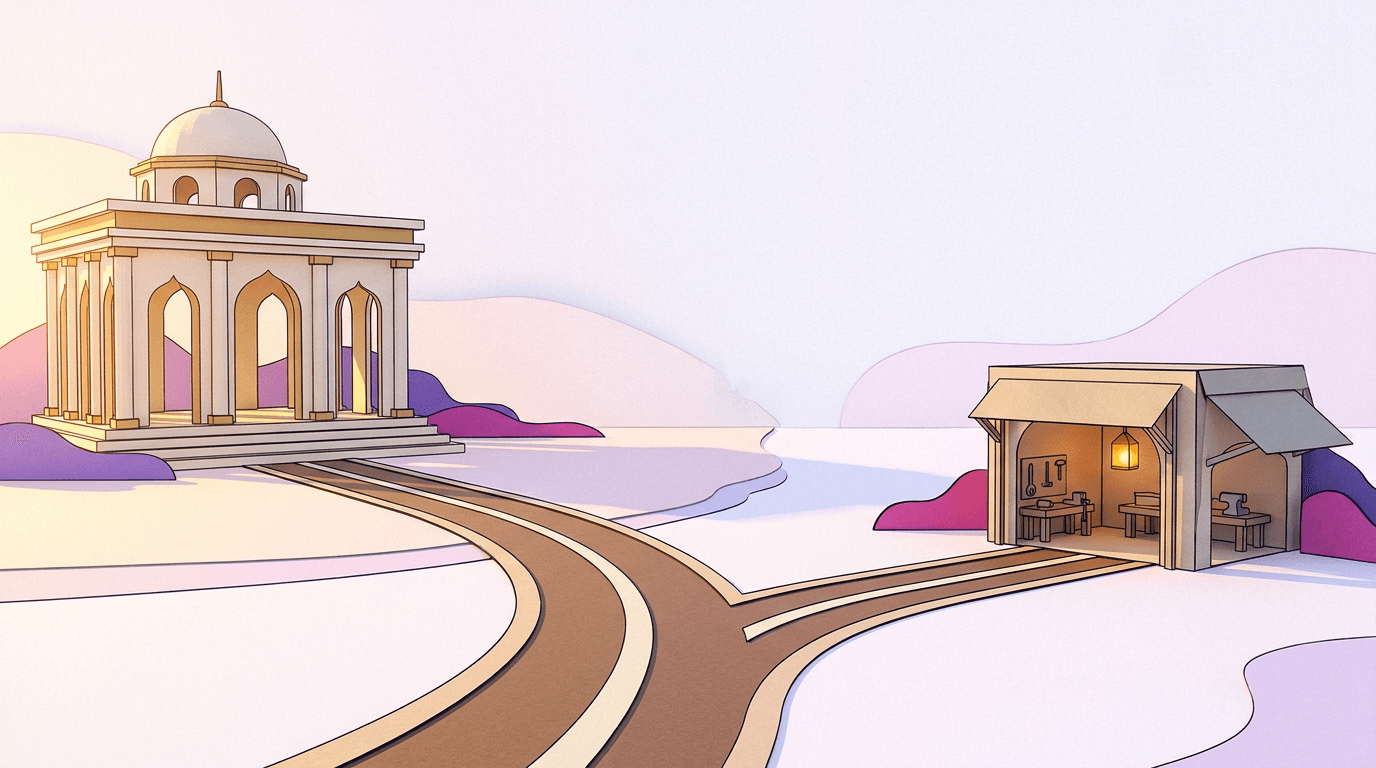
My rough rule after living in both: Midjourney is a style engine you rent, and this is a model bill you pay. Want a picture that looks like Midjourney? Use Midjourney. Want a picture of a specific thing, described precisely, cheap enough to iterate on twenty times before you're happy? Per-generation wins. The pricing page carries the full live grid if you'd rather check these numbers against reality than trust a blog post, and the longer subscription-versus-balance argument is written up separately.
FAQ
Is there a free Midjourney alternative?
Not a real one, and treat any claim otherwise with suspicion. Registration here credits $0.20 of balance, which covers six Nano Banana 2 Lite images. That's small, but it doesn't expire and no plan is attached to it. Midjourney itself has no free tier in 2026, so a paid plan is the only door in.
Will my Midjourney prompts work here?
Partially. Midjourney rewards short evocative phrases with parameters bolted on; Nano Banana models want a scene described in plain sentences. Aspect ratio moves to a picker instead of --ar, and --sref has no equivalent. Rewriting a prompt as one or two descriptive sentences usually fixes the output in a single try. The Nano Banana prompting guide covers the translation properly.
Can I keep a character consistent without --cref or --oref?
Yes, though the method differs. You supply reference images and describe the character explicitly (face, build, clothing, distinguishing details), and Nano Banana Pro carries that across a series. Explicit descriptions survive edits better than sparse ones. There's a walkthrough of the technique and a feature page with examples.
Does the balance expire?
No. It's prepaid USD that sits until spent. There's no billing cycle, so there's nothing to reset. Midjourney's Fast GPU hours expire at the end of each cycle and don't carry over.
What about privacy and commercial use?
Both platforms allow commercial use of what you generate. Privacy differs: Midjourney puts stealth mode behind the $60/month Pro tier, while nothing generated here is published to a public feed at any price. The gallery on our homepage is curated marketing work, not user output.
What happens when a generation fails?
The charge is refunded to your balance automatically, including content-filter blocks. You pay for delivered images, not attempts. Worth knowing when you're batch-testing a prompt that keeps tripping the filter.